Maintaining workplace safety compliance in South East Queensland is not merely a recommended practice; it is a stringent legal obligation. For businesses operating in Brisbane and Ipswich: ranging from high-traffic retail shops to heavy industrial warehouses: the fire extinguisher is the first line of defence against small-scale fires. However, the presence of an extinguisher does not guarantee protection or regulatory compliance.
Under the Australian Standard AS 1851:2012 (Routine service of fire protection systems and equipment), fire extinguishers must undergo systematic inspections to ensure operational readiness. Failure to meet these standards during an audit can result in substantial fines, increased insurance premiums, and, most importantly, significant risk to life and property.
In this comprehensive guide, we examine the ten most common reasons fire extinguishers fail audits and provide a systematic process for mitigation and rectification.
1. Overdue 6-Monthly Routine Servicing
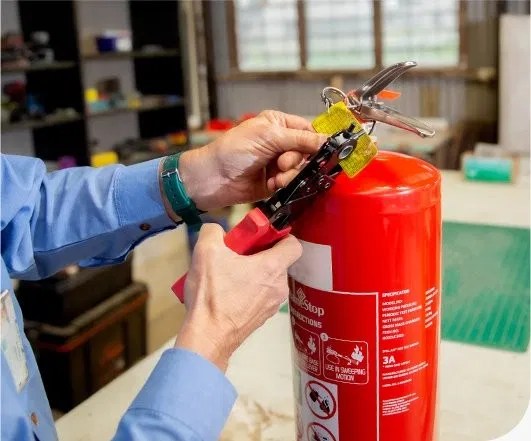
The primary reason for audit failure in Ipswich workplaces is the lapse in routine service intervals. According to AS 1851:2012, portable fire extinguishers require a Level 1 service every six months. This involves a visual inspection, checking for physical damage, and ensuring the device is correctly positioned and tagged.
When an auditor inspects your facility, they will look directly at the yellow maintenance tag. If the date of the last service exceeds the six-month window, the equipment is deemed non-compliant. This oversight often stems from fragmented maintenance schedules where fire and electrical testing are handled by separate providers.
2. Inaccurate Pressure Gauge Readings
What is the most common physical defect found during a safety audit? Incorrect pressure levels. A fire extinguisher’s efficacy relies entirely on the internal pressure required to discharge the extinguishing agent.
If the needle on the pressure gauge is positioned in the "red" zone: either under-pressurised or over-pressurised: the unit will fail its inspection. Under-pressurisation indicates a slow leak or a faulty valve, meaning the extinguisher may fail to discharge when needed. Over-pressurisation can lead to cylinder failure or dangerous discharge speeds.
3. Physical Damage: Dents and Corrosion
Industrial environments in Brisbane, particularly warehouses and construction sites, often subject safety equipment to harsh physical conditions. Dents, deep scratches, or signs of corrosion on the extinguisher’s cylinder are critical defects.
Corrosion is especially prevalent in Ipswich areas with high humidity or where extinguishers are stored near corrosive chemicals. Even a minor dent can compromise the structural integrity of a pressurised vessel. During a professional audit, any cylinder showing signs of rust or significant physical impact must be removed from service and replaced immediately.
4. Missing or Broken Tamper Seals and Safety Pins
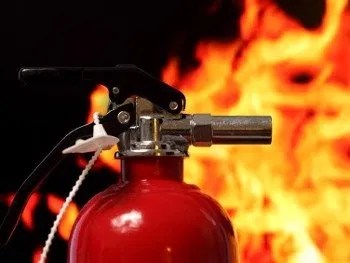
How can you tell if an extinguisher has been tampered with or partially discharged? The answer lies in the anti-tamper seal and the safety pin. The safety pin prevents accidental discharge, while the plastic tamper seal provides visual evidence that the pin has not been removed.
Auditors frequently find extinguishers where the seal is missing or broken. In a high-pressure workplace, this might occur through accidental snagging, but from a compliance standpoint, it indicates a compromised unit. Without a secure seal, there is no guarantee that the extinguisher contains its full charge.
5. Blocked or Damaged Hoses and Nozzles
A fire extinguisher is only effective if the extinguishing agent can reach the fire. In environments such as workshops or factories, it is common for the discharge hose or nozzle to become obstructed by dirt, debris, or even insect nests (a frequent occurrence in Queensland).
Furthermore, rubber hoses can perish or crack over time due to UV exposure. A cracked hose will lose pressure during discharge, significantly reducing the extinguisher's range and effectiveness. AS 1851:2012 requires a thorough inspection of the hose and nozzle assembly to ensure they are clear and flexible.
6. Incorrect Mounting Height and Insecure Brackets
Fire extinguishers must be easily accessible to all staff, including those with limited mobility. AS 2444:2001 specifies strict requirements for mounting heights. Typically, the handle of an extinguisher weighing up to 10kg should be no more than 1.2 metres above the floor.
If an extinguisher is left resting on the floor or mounted too high, it constitutes an audit failure. Furthermore, the mounting bracket must be secure. Loose brackets in high-vibration environments: like a factory or a vehicle-mounted unit: can lead to the extinguisher falling, causing damage to the valve or the cylinder.
7. Obstructed Access and Poor Visibility
Is your fire safety equipment hidden behind inventory or office furniture? "Blocked access" is a frequent non-compliance finding in Ipswich warehouses. Safety regulations dictate that an extinguisher must be immediately accessible at all times.
If a staff member must move boxes, pallets, or equipment to reach an extinguisher, the seconds lost could allow a small fire to become unmanageable. Auditors look for a clear path of at least one metre around all fire protection equipment.
8. Missing or Non-Compliant Signage
Presence of the extinguisher is only half of the requirement; the other half is visibility. In the event of a fire, smoke can quickly obscure low-level equipment. Therefore, high-level signage (Location Signs) must be mounted at least 2 metres above the floor to indicate the extinguisher's position.
Signs must also be "correct for the class." For example, if you have a CO2 extinguisher for electrical risks, the signage must reflect that. Missing, faded, or incorrectly placed signs are a common point of failure for Brisbane businesses that do not utilise a systematic process for safety compliance.
9. Wrong Extinguisher Type for the Hazard Class
Not all fires are the same, and using the wrong extinguishing agent can be catastrophic. For instance, using a water-based extinguisher on an electrical fire can lead to electrocution.
An audit will assess whether the hazard class of the environment matches the equipment provided:
- Class A: Ordinary combustibles (wood, paper).
- Class E: Electrical equipment.
- Class F: Cooking oils and fats.
If your Ipswich commercial kitchen only has a Dry Powder extinguisher instead of a Wet Chemical unit (Class F), you will fail the audit. Professional fire service and sales providers ensure your equipment is tailored to your specific site risks.
10. Inadequate Record Keeping and Missing Digital Reports
In the modern regulatory landscape, "if it isn't documented, it didn't happen." Many businesses fail audits not because their equipment is faulty, but because they cannot produce the required service records.
While the yellow metal tag on the extinguisher is vital, auditors often require a comprehensive logbook or a digital compliance certificate. ABC Test Tag & Fire provides digital reporting that is easily accessible during an audit, ensuring you can prove your compliance history at the touch of a button.
How to Fix Compliance Failures: The Integrated Approach
Rectifying these ten issues manually can be an administrative burden for business owners. The most efficient way to ensure 100% compliance is through a bundled safety service.
At ABC Test Tag & Fire, we specialise in helping Brisbane and Ipswich businesses achieve total workplace safety through a single, streamlined provider. By integrating your fire extinguisher testing with your electrical test and tag and RCD testing, you eliminate the risk of missing service dates.
The Benefits of Bundling with ABC Test Tag & Fire:
- Cost Efficiency: You can save 20-40% on your total maintenance costs by having one technician handle both fire and electrical compliance in a single visit.
- Digital Compliance: Receive instant digital certificates that satisfy QLD safety laws and insurance requirements.
- Qantas Points: We are the only provider in the region that allows you to earn Qantas points on your safety services, turning a mandatory expense into a business benefit.
- Local Expertise: As a locally owned Brisbane business, we understand the specific regulatory requirements for Queensland worksites.
Conclusion
A fire extinguisher audit failure is a clear signal of a gap in your workplace safety strategy. Whether it is an expired tag, a blocked path, or a lack of documentation, these risks can be mitigated through professional, regular maintenance.
Do not wait for an auditor or: worse: an emergency to discover your equipment is non-compliant. Ensure your Brisbane or Ipswich business is protected by scheduling a comprehensive fire and electrical safety audit today.