Operating a commercial enterprise within the bustling Brisbane Southside commercial precinct: spanning Calamvale, Sunnybank Hills, Parkinson, Algester, and Drewvale: requires rigorous adherence to statutory workplace health and safety frameworks. Whether managing a retail storefront, professional office suite, light industrial warehouse, or manufacturing factory, business proprietors carry a non-negotiable legal obligation under the Work Health and Safety Act 2011 (Qld). Ensuring that equipment and life safety systems remain fully compliant is not merely a bureaucratic checkbox; it is the fundamental cornerstone of risk mitigation and asset protection.
Yet, many commercial operators find themselves grappling with fragmented maintenance schedules, paying disparate service providers exorbitant fees for isolated inspections. How can local enterprises streamline their regulatory burdens while simultaneously optimizing their operational expenditure? The answer lies in a consolidated compliance strategy that pairs electrical testing with routine fire safety servicing, yielding significant cost efficiencies without compromising on safety standards.
Queensland Workplace Compliance: Statutory Obligations for Calamvale
What statutory frameworks govern commercial compliance on the Brisbane Southside? Business operators in Calamvale are subject to rigorous legislative instruments that mandate periodic inspection, testing, and certification of workplace safety infrastructure.
Under WorkSafe Queensland guidelines, duty holders must eliminate or minimize risks arising from electrical equipment and fire hazards. Two benchmark Australian Standards dictate the operational requirements:
- AS/NZS 3760:2022 (In-service safety inspection and testing of electrical equipment and RCDs): This standard specifies the mandatory testing intervals, visual examination protocols, and electrical verification procedures required for portable and plug-in appliances, extension leads, and residual current devices (RCDs).
- AS 1851:2012 (Routine service of fire protection systems and equipment): This standard outlines the mandatory 6-monthly, annual, and multi-year inspection, testing, and maintenance regimes for portable fire extinguishers, fire blankets, hose reels, and emergency evacuation lighting.
"The person conducting a business or undertaking (PCBU) must ensure, so far as is reasonably practicable, that the provision and maintenance of safe plant and structures are executed in strict accordance with recognized Australian Standards." : Work Health and Safety Regulation 2011
Failing to meet these regulatory standards exposes organizations to severe penalties, voided commercial insurance policies, and catastrophic liability in the event of an electrical fault or workplace fire.
How Does AS/NZS 3760 and AS 1851 Mandate Systematic Risk Mitigation?
Implementing a robust compliance program requires understanding the distinct mechanics of electrical and fire safety testing. Each standard enforces a systematic process designed to catch faults before they precipitate structural failure or personal injury.
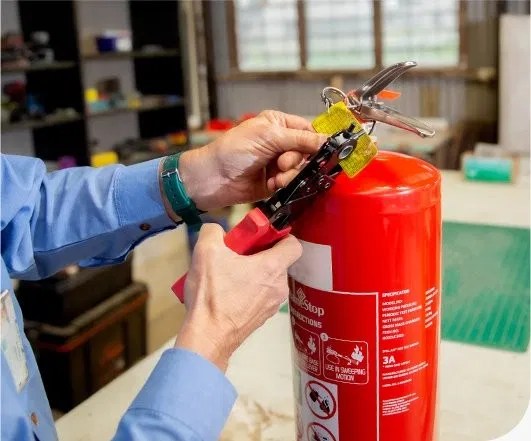
Electrical Test & Tagging Protocols
Under AS/NZS 3760:2022, portable electrical equipment in commercial environments must undergo methodical verification by a competent person. The inspection sequence includes:
- Comprehensive Visual Examination: Inspecting flexible cords, outer casings, plugs, and sockets for mechanical damage, thermal degradation, or exposure to moisture.
- Electrical Instrument Testing: Utilizing calibrated Portable Appliance Testers (PAT) to measure earth continuity, insulation resistance, polarity, and leakage currents.
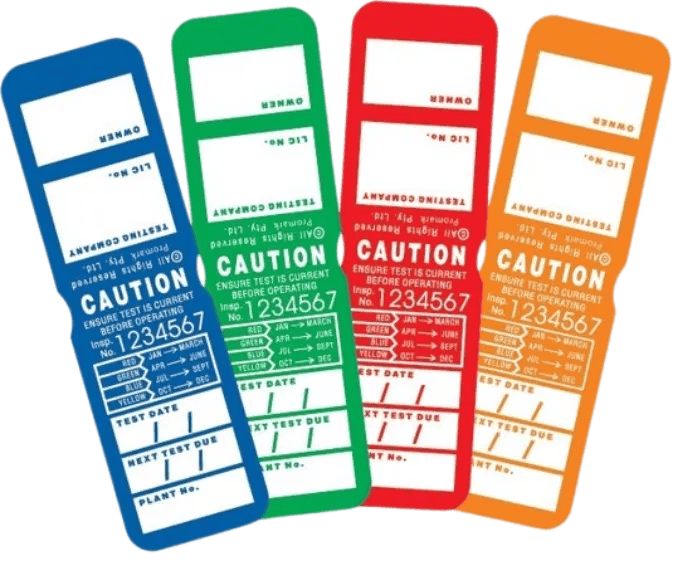
- Durable Tagging and Digital Reporting: Affixing high-visibility, QR-coded tags that record the test date, re-test due date, and tester identification, backed by secure digital compliance certificates.
Fire Safety Equipment Maintenance
Simultaneously, AS 1851 governs the routine service of fire suppression assets. Portable extinguishers and fire blankets require mandatory 6-monthly physical inspections. Technicians verify pressure gauges, tamper seals, operating levers, and discharge nozzles to guarantee immediate operational readiness during an emergency.
| Equipment Class | Applicable Standard | Minimum Service Frequency | Core Compliance Requirement |
|---|---|---|---|
| Portable Electrical Appliances | AS/NZS 3760:2022 | 6 to 12 months (Risk-based) | Visual & electrical testing, QR-coded tagging, asset register |
| Residual Current Devices (RCDs) | AS/NZS 3760:2022 | 6 to 12 months | Trip-time verification, push-button operational test |
| Fire Extinguishers & Blankets | AS 1851:2012 | 6-monthly routine service | Pressure check, tamper seal inspection, service tag updating |
| Emergency & Exit Lighting | AS/NZS 2293 | Annual discharge testing | 90-minute battery backup test, luminaire verification |
Why Bundling Electrical and Fire Services Yields a 40% Cost Reduction
Why do fragmented service models drain corporate balance sheets? Historically, commercial managers hired independent contractors for electrical tagging in January and separate fire technicians in June. This administrative duplication results in redundant call-out fees, administrative overhead, and operational downtime.
By partnering with a consolidated provider such as ABC Test Tag & Fire, local businesses in Calamvale and surrounding industrial parks can bundle their electrical test and tag services with routine fire safety and RCD testing.
Key Operational Advantages of Service Bundling:
- Cost Efficiency: Eliminating duplicate call-out charges and leveraging bundled service economies saves businesses between 20% and 40% annually.
- Streamlined Accountability: A single qualified technician coordinates both electrical and fire compliance during one scheduled site visit, minimizing disruption to staff and customers.
- Rewards Program Integration: Enterprise clients accumulate valuable Qantas Business Points on routine compliance expenditures, transforming unavoidable safety overheads into corporate travel rewards.
- Instant Digital Reporting: Access cloud-based compliance registers instantly via QR-coded tags, ensuring complete audit-readiness for WorkSafe Queensland inspectors or insurance underwriters.
Step-by-Step Implementation for Calamvale Offices, Warehouses, and Factories
How should a commercial facility manager initiate a seamless compliance upgrade? Executing a structured transition guarantees that zero assets are overlooked and that all statutory timeframes are met without operational friction.
Step 1: Comprehensive Site Audit & Asset Discovery
Conduct an exhaustive inventory audit across your premises. Identify all plug-in electrical appliances, fixed RCD safety switches, fire extinguishers, fire blankets, and exit luminaires. Establishing a centralized asset register forms the baseline for all subsequent testing cycles.
Step 2: Risk Assessment & Interval Scheduling
Determine appropriate testing frequencies based on your operating environment. Warehouses, light manufacturing factories, and commercial kitchens experience hostile conditions requiring 6-monthly electrical and fire checks, whereas standard administrative offices generally operate on 12-monthly cycles under AS/NZS 3760.
Step 3: Engaging a Licensed, Fully Insured Provider
Select a locally owned compliance specialist with full public liability insurance and verified competency in both AS/NZS 3760 and AS 1851. Ensure the provider supplies transparent digital reporting and durable, weather-resistant QR tags.
Step 4: Maintenance Execution & Certificate Archiving
Allow certified technicians to execute testing with minimal workplace disruption. Upon completion, archive your digital compliance certificates securely to satisfy statutory record-keeping mandates.
Securing Your Workplace Future on the Brisbane Southside
Maintaining uncompromising standards of workplace safety is an essential duty for every enterprise operating in Calamvale, Algester, Parkinson, and Sunnybank Hills. Delaying compliance checks invites regulatory sanctions, financial penalties, and unacceptable risk to personnel.

By consolidating your electrical testing, RCD verification, and fire safety maintenance into a single bundled service agreement, your organization can achieve absolute regulatory alignment while capturing a substantial 40% reduction in operating costs.
Protect your staff, safeguard your commercial assets, and earn Qantas points on your compliance investments today. Visit ABC Test Tag & Fire to schedule your comprehensive facility audit and secure your business's safety future.