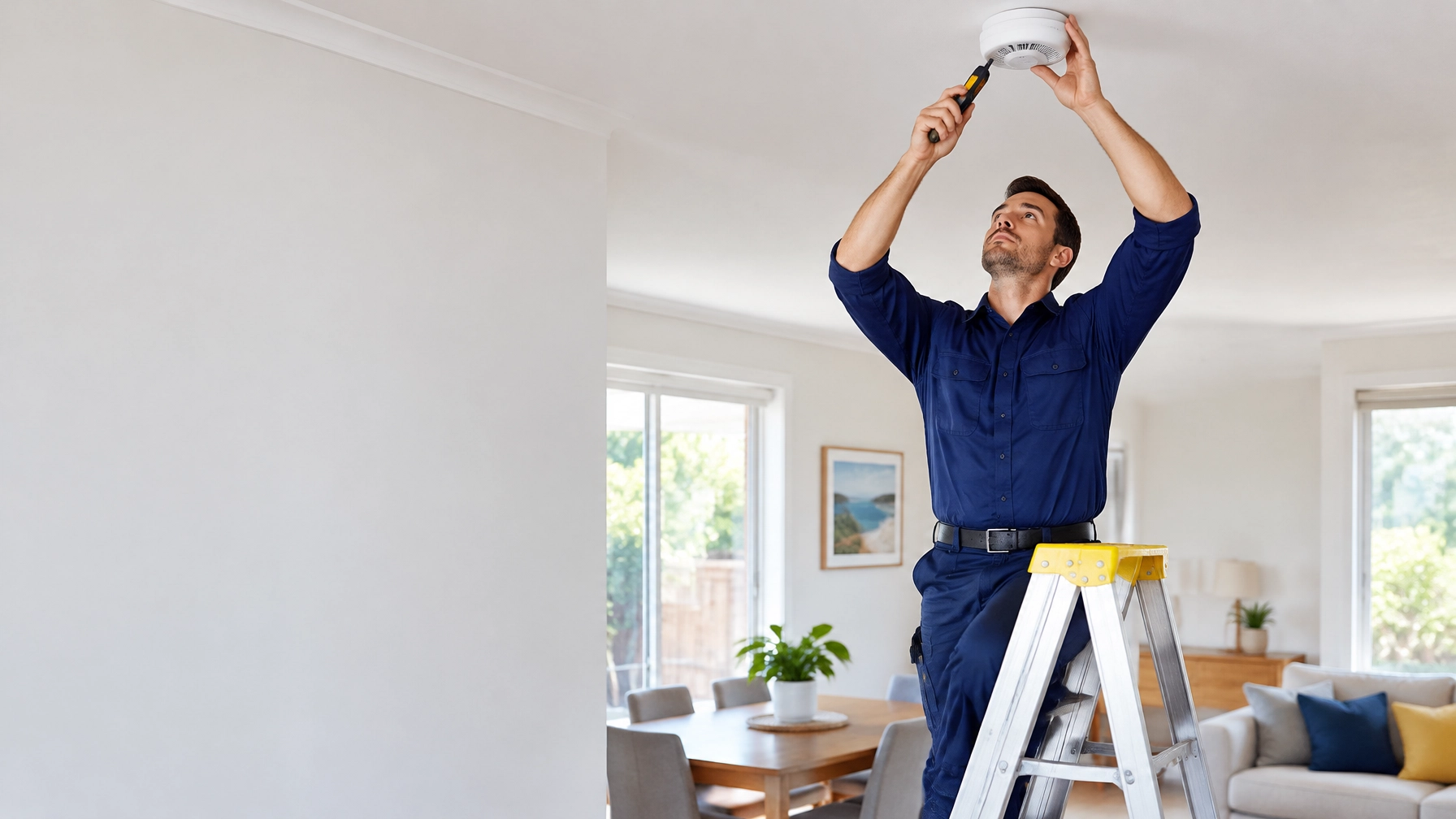
December is the final practical month to arrange work before Queensland’s 1 January 2027 smoke alarm deadline. If you own or manage a Brisbane property, use the first week of December to answer three questions: Is the property covered? Do its alarms meet the requirements? And can any outstanding work realistically be completed in time?
Do not assume that the deadline gives every property owner until January. Some requirements have applied to dwellings being sold, rented or re-rented since 1 January 2022. A booking is also not the same as completed compliance: an inspection may identify faults, access issues or additional work that takes time to resolve.
1. Is your property covered, and what type is it?
The final deadline applies to existing private dwellings, including houses, townhouses and units, as well as registered caravans and motorhomes. It is a residential requirement, not a general smoke alarm deadline for every commercial workplace.
Business owners and organisations may still be in scope if they own or manage residential properties, such as rental portfolios, strata dwellings or serviced accommodation. Check the status of each property individually.
| Property status | What to do in December |
|---|---|
| Owner-occupied dwelling | Confirm whether it has already been upgraded under an earlier trigger. If not, check alarm type, age, locations and interconnection, then arrange any required work promptly. |
| Rented or being re-rented | Do not treat 1 January 2027 as a grace period. Queensland requirements already apply to dwellings being rented or re-rented. Verify the alarms and arrange any outstanding work before the tenancy starts or renews. |
| Being sold | Confirm compliance before transfer and speak with your conveyancer about the required property information and evidence. The seller’s obligations are triggered by the sale process, not deferred to January 2027. |
| Being prepared for rent | Confirm compliance before advertising or starting the tenancy, and schedule access and any installation work now. The landlord is responsible for compliant installation. |
For a Queensland-registered caravan or motorhome, check the separate QFD guidance. The caravan-specific advice calls for at least one working photoelectric smoke alarm installed on the ceiling; do not assume that a caravan follows the same room-by-room placement rules as a house.
The Queensland Fire Department (QFD) states that all existing private homes, townhouses, units and manufactured homes require interconnected photoelectric alarms by 1 January 2027. Its smoke alarm FAQs explain that homes being sold, rented or re-rented must already comply.
2. What must compliant alarms be?
For a dwelling, check the alarms against the requirements and guidance that apply to the property. Required smoke alarms must:
- Be photoelectric and comply with AS 3786-2014.
- Be interconnected so that when one activates, the other required alarms also sound.
- Be installed on each storey, in each bedroom and in hallways connecting bedrooms with the rest of the dwelling. Where there is no connecting hallway, follow QFD guidance for positioning between bedrooms and other parts of the storey. A storey without bedrooms requires an alarm in the most likely path to an exit.
- Be less than 10 years old and operate when tested.
- Be powered in a way permitted for that dwelling. Depending on the circumstances, this may be a mains-connected alarm with a secondary battery supply or a compliant alarm with a non-removable 10-year battery. Existing hardwired alarms generally need to be replaced with hardwired alarms.
Do not rely only on appearance. Check the AS 3786-2014 marking and the manufacture date, which may be on the alarm body. A professional inspection can help identify expired alarms, missing interconnection or placement issues.
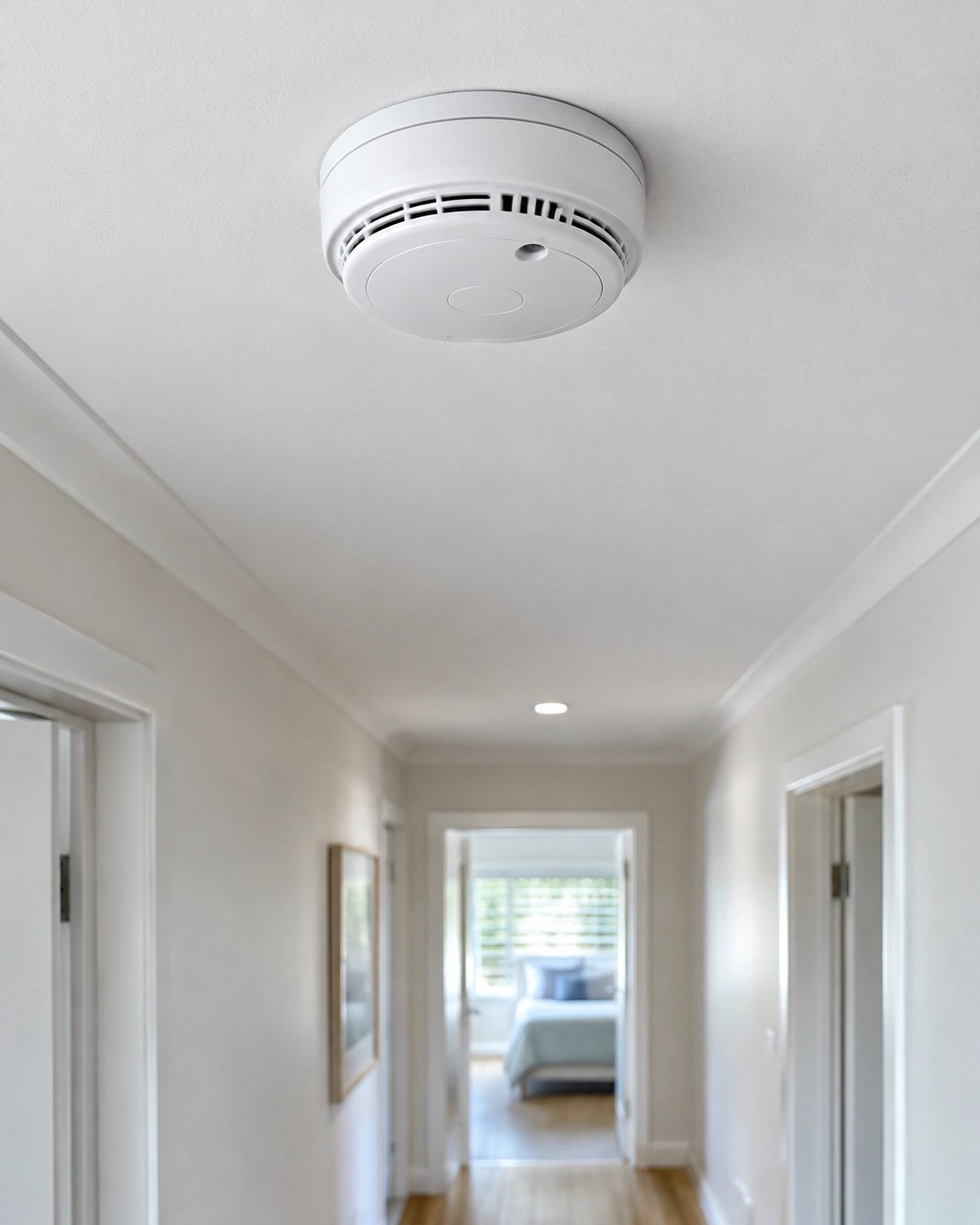
A 240-volt smoke alarm must be connected by a licensed electrician. QFD also advises that hardwired interconnected smoke alarms require licensed electrical work. Confirm the proposed equipment and installation method against QFD guidance and the circumstances of the dwelling before authorising work.
3. What can still be achieved in December, and what may be difficult?
December work may still be achievable, but timing depends on the property, required scope, provider availability, equipment and access. Holiday closures can affect both trades and tenants. A failed check late in the month may leave little time to obtain parts, arrange a licensed electrician, secure access and verify the completed work before 1 January.
Treat the first week of December as a decision point, not a reason to wait until the end of the month.
If you have done nothing yet, what should you do first?
- Book an inspection or assessment now. Explain the property type, number of dwellings and any known alarm or wiring details.
- Gather existing records. Locate invoices, previous inspection notes and installation information. These may help establish what has been done, but do not assume paperwork alone proves the current condition.
- Confirm tenant access before the holiday period. Agree on suitable times and responsibilities with occupants or the property manager.
- Ask what happens if an alarm fails. Clarify whether follow-up work, replacement equipment or a licensed electrician may be needed, and what availability exists.
- Keep evidence of completed work. Retain invoices, installation or inspection records, and any relevant electrical documentation with the property file.
Be realistic about the time remaining. If a provider cannot complete the work before the deadline, ask for a clear explanation of the outstanding actions and seek advice from the relevant authority or a qualified professional. Do not represent an incomplete job as compliant.
Why coordinate this with other safety compliance work?
Residential smoke alarm compliance is separate from a business’s workplace safety obligations. However, property owners who also operate commercial premises may be able to coordinate visits and records for different services. This does not make one inspection a substitute for another; each asset and legal duty must be assessed on its own requirements.
ABC Test Tag & Fire provides services across Brisbane and Ipswich, including:
- Electrical test and tag and RCD testing for 240V, three-phase and low-voltage equipment in accordance with AS/NZS 3760.
- Fire extinguisher and fire blanket testing, including six-monthly routine testing in accordance with AS 1851:2012, plus safety equipment sales.
- Annual exit light and emergency lighting testing and sales in accordance with AS/NZS 2293.
- Smoke alarm compliance work, with 240V alarms connected by a licensed electrician.
The team is locally owned, fully insured and has operated since 2005. Clients can receive durable QR-coded tags and same-day digital compliance certificates for applicable services. Bundling services can save 20–40%, and clients can earn QANTAS points on services.


For more information, see ABC’s electrical test and tag services, fire extinguisher testing and exit light testing.
What is the next step for Brisbane property owners?
Start with the property’s status, verify the alarm requirements and book any needed work as soon as possible. Check tenant access and leave time for follow-up if an alarm fails inspection. The final month is not a reliable buffer for unresolved issues.
Contact ABC Test Tag & Fire on 1300 66 94 65, email info@abctestntag.com.au, or visit www.abctestntag.com.au. Postal address: PO Box 6220, Upper Mount Gravatt QLD 4122.
This article provides general information only and is not legal advice. Requirements may depend on the property and its circumstances. Refer to current Queensland Fire Department guidance and seek advice from a suitably qualified professional where needed.