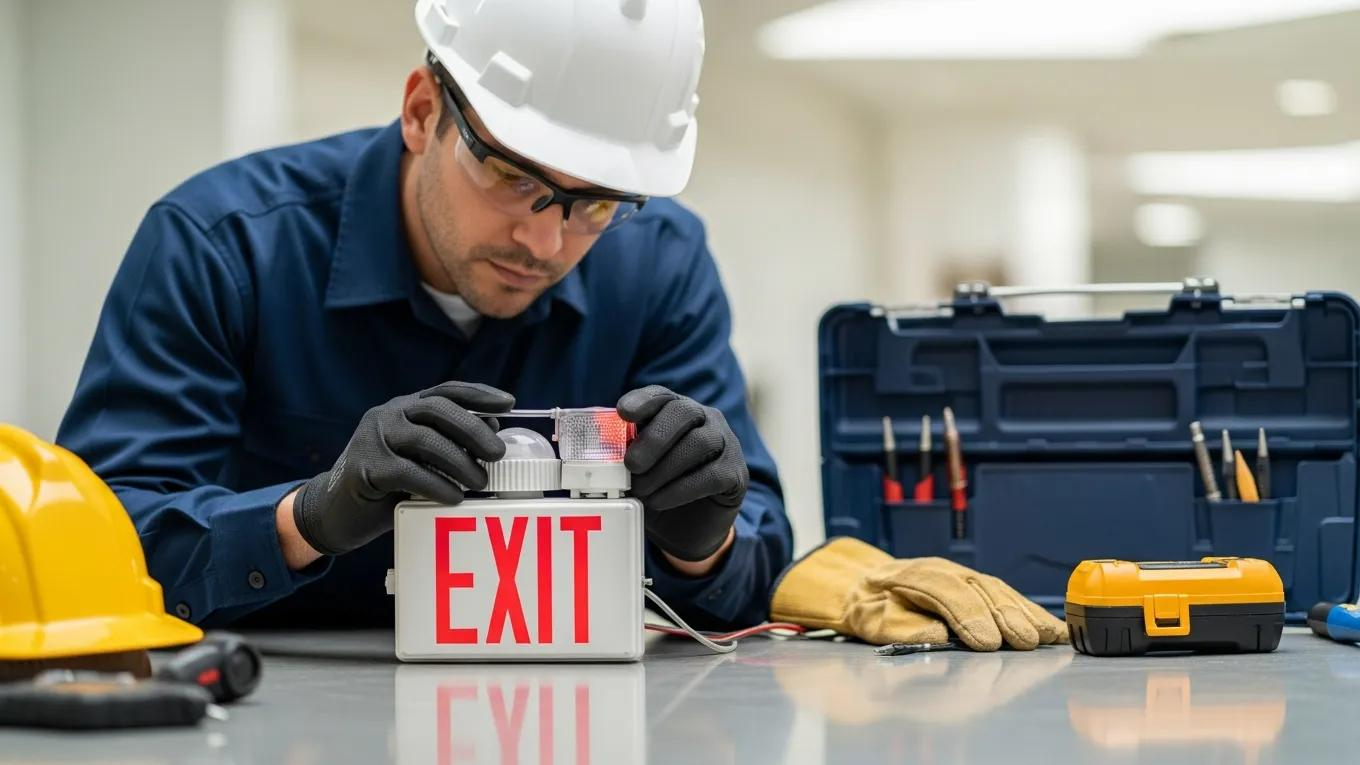
Ensuring Exit Light Compliance in Logan: A Professional Guide
Exit light testing is a critical component of fire safety compliance, ensuring that emergency lighting systems function effectively during power outages or emergencies. This comprehensive guide will explore the importance of exit light testing, the legal requirements in Logan, and the applicable Australian standards that govern these practices. Businesses often face challenges in maintaining compliance, which can lead to safety risks and legal penalties. By understanding the mechanisms behind exit light testing and the benefits of regular inspections, businesses can enhance workplace safety and ensure adherence to regulations. This article will cover the procedures for testing, qualifications needed for technicians, and the importance of regular maintenance, along with the benefits of compliance.
Understanding Exit Light Testing
Exit light testing involves the systematic evaluation of emergency lighting systems to ensure they operate correctly during emergencies. This testing is essential for maintaining safety in commercial and public buildings, as it guarantees that exit signs and emergency lights are functional when needed. The operational requirements during power outages are critical, as they directly impact the safety of occupants. Regular testing helps identify any malfunctions or deficiencies in the system, allowing for timely repairs and maintenance.
Indeed, the fundamental role of emergency lighting in ensuring occupant safety during critical events like power outages is widely recognized.
Emergency Lighting: Essential for Building Safety & Power Outages
Emergency lighting systems are an essential component of building safety infrastructure and play a critical role in ensuring the safety of people during power outages or other emergencies. As energy efficiency and environmental sustainability continue to be a focus in building design and construction, there is a growing interest in developing emergency lighting systems that not only reduce energy consumption but also operate on zero electrical power.
Developments and trends in emergency lighting systems: from energy-efficiency to zero electrical power consumption, A Abdelmoumene, 2024
Legal Requirements
In Queensland, specific legal requirements govern exit light testing to ensure safety compliance. The Australian Standard AS/NZS 2293.2 outlines the necessary protocols for testing emergency lighting systems. Compliance with the Electrical Safety Act 2002 mandates that businesses conduct regular inspections and testing of their exit lights to avoid legal repercussions. The frequency of testing is also specified, with recommendations for monthly checks and annual full discharge tests to ensure ongoing compliance.
What Are the Legal Requirements for Exit Light Testing in Logan?
The legal requirements for exit light testing in Logan include adherence to AS/NZS 2293.2, which specifies the testing frequency and procedures. Businesses must ensure that their emergency lighting systems are inspected regularly and that any deficiencies are addressed promptly. Failure to comply with these regulations can result in significant penalties and increased liability in the event of an emergency.
Applicable Australian Standards
The Australian standards governing emergency lighting are crucial for ensuring safety compliance. AS/NZS 2293 provides a framework for the design, installation, and maintenance of emergency lighting systems. Compliance with these standards is not only a legal requirement but also a best practice for ensuring the safety of building occupants. Understanding these standards helps businesses implement effective safety measures and avoid potential hazards.
Further research highlights the global context and specific requirements for emergency lighting systems, including those in Australia.
Australian Emergency Lighting Standards & Legal Compliance
Purpose: The aim of this publication is to present the results of theoretical research – assessment of normative and legal documents used to design and installemergency lightingsystems in selected countries. The analysis took into account the guidelines and standards of countries such as: United Arab Emirates, United States, Australia, Netherlands, Norway, Great Britain and Poland.
Analysis and Evaluation of Currently Used Standards/Norms/
Guidelines for the Design and Installation of Emergency Lighting, T Popielarczyk, 2024
Which Australian Standards Govern Emergency Lighting Compliance?
AS/NZS 2293 is the primary standard governing emergency lighting compliance in Australia. It outlines the requirements for the installation, maintenance, and testing of emergency lighting systems. Compliance with this standard ensures that emergency lights are adequately positioned, maintained, and functional during emergencies, thereby enhancing overall safety.
Local Fire Safety Regulations
Local fire safety regulations in Queensland further emphasize the importance of exit light testing. These regulations require businesses to maintain their emergency lighting systems in accordance with both state and national standards. Regular inspections and testing are essential to ensure compliance and to protect the safety of employees and customers.
What Local Fire Safety Regulations Apply in Logan and Queensland?
In Logan and throughout Queensland, local fire safety regulations mandate that businesses adhere to the requirements set forth in AS/NZS 2293.2. These regulations require regular testing and maintenance of emergency lighting systems to ensure they are operational during emergencies. Businesses must also keep detailed records of inspections and maintenance activities to demonstrate compliance.
Step-by-Step Procedures for Inspection and Testing

Conducting exit light testing involves a series of systematic steps to ensure that all components of the emergency lighting system are functioning correctly. This process typically includes an initial consultation, visual inspections, and documentation of findings. Following these procedures helps businesses maintain compliance and ensure the safety of their premises.
How Is Exit Light Testing Conducted to Meet Safety Standards?
Exit light testing is conducted through a series of steps that include visual inspections of exit signs and emergency lights, functional tests to ensure they operate correctly, and documentation of the results. This thorough approach ensures that all aspects of the emergency lighting system are evaluated and any issues are addressed promptly.
What Are the Step-by-Step Procedures for Emergency Lighting Inspection and Testing?
- Initial Consultation: Assess the current state of the emergency lighting system and identify any potential issues.
- Visual Inspection: Check all exit signs and emergency lights for physical damage and proper placement.
- Functional Testing: Conduct tests to ensure that all lights illuminate correctly during power outages.
- Documentation: Record the results of the inspection and testing for compliance verification.
Qualifications Needed for Performing Testing
Technicians performing exit light testing must possess specific qualifications to ensure they can conduct inspections safely and effectively. Licensing requirements and relevant experience are essential for ensuring that testing is performed according to legal and safety standards.
Who Is Qualified to Perform Electrical Safety and Exit Light Testing in Logan?
Qualified technicians must hold relevant electrical licenses and have experience in emergency lighting systems. Training in safety compliance and familiarity with Australian standards are also critical for ensuring that testing is conducted properly.
Importance of Regular Maintenance

Regular maintenance of exit lights is crucial for ensuring their functionality during emergencies. Faulty systems can pose significant safety risks, and legal implications may arise from non-compliance with testing requirements. By prioritizing maintenance, businesses can mitigate these risks and enhance overall safety.
How Often Should Exit Lights Be Tested to Maintain Compliance?
Exit lights should be tested regularly, with monthly inspections recommended for visual checks and annual full discharge tests to ensure compliance with AS/NZS 2293.2. This routine maintenance helps identify any issues before they become critical.
Benefits of Compliance
Maintaining compliance with exit light testing regulations offers several benefits for businesses. These include enhanced safety for employees and customers, avoidance of legal penalties, and improved business reputation. Compliance not only protects individuals but also fosters a culture of safety within the organization.
What Are the Benefits of Professional Exit Light Testing Services?
Professional exit light testing services provide businesses with peace of mind, knowing that their emergency lighting systems are compliant and functional. These services often include comprehensive inspections, documentation, and recommendations for maintenance, ensuring that businesses meet all legal requirements.
How Does Testing Prevent Fines and Ensure Legal Compliance?
Regular exit light testing helps businesses avoid fines by ensuring compliance with local regulations. By maintaining accurate records of inspections and addressing any deficiencies promptly, businesses can demonstrate their commitment to safety and compliance.
In What Ways Does Exit Light Testing Enhance Workplace Safety and Insurance Compliance?
Exit light testing enhances workplace safety by ensuring that emergency lighting systems are operational during emergencies. This compliance not only protects employees and customers but also satisfies insurance requirements, reducing the risk of claims related to safety violations.
How Do Regular Inspections Reduce Compliance Failure Rates?
Regular inspections of exit lights help identify potential issues before they escalate, significantly reducing compliance failure rates. By addressing deficiencies promptly, businesses can maintain a safe environment and avoid legal repercussions.
How Can Businesses Book and Access Emergency Lighting Testing Services in Logan?
Businesses can book emergency lighting testing services by contacting qualified providers in Logan. It is essential to choose a reputable company that adheres to Australian standards and has experience in conducting exit light testing.
What Is the Process to Request a Quote and Schedule Exit Light Testing?
To request a quote for exit light testing, businesses should reach out to service providers with details about their premises and specific needs. Scheduling can typically be done via phone or email, ensuring that testing is conducted at a convenient time.
What Local Service Providers Offer Prompt and Certified Testing Solutions?
In Logan, several local service providers specialize in emergency lighting testing and compliance services. These providers offer certified testing solutions that ensure businesses meet all legal requirements and maintain a safe environment for their employees and customers.
For businesses seeking reliable emergency lighting solutions, Logan Fire Safety Services offers comprehensive exit light testing and maintenance to ensure compliance with local regulations.
Understanding the AS/NZS 2293.2 standard is essential for businesses aiming to meet Australian emergency lighting requirements effectively.
To facilitate compliance, many companies utilize professional emergency lighting experts who specialize in inspection, testing, and certification services.