Businesses operating around Lytton Road, the Port of Brisbane and the surrounding industrial corridor manage a combination of electrical, fire and emergency-evacuation risks. Warehouses, logistics facilities, transport depots, manufacturing sites, workshops and industrial premises commonly use portable tools, three-phase equipment, extension leads, battery chargers, fire protection equipment and emergency lighting.
What does effective Lytton industrial safety compliance require? It requires a systematic process that combines risk assessment, inspection, testing, defect management and reliable records.
ABC Test Tag & Fire provides coordinated test and tag Lytton, RCD testing, fire extinguisher testing and emergency lighting services. By booking multiple services together, eligible businesses can save up to 40%: the more services you book, the more you save.
Why Is Safety Compliance Important for Lytton Businesses?
The Port of Brisbane and Lytton industrial corridor support port-related logistics, warehousing, freight, manufacturing and industrial operations. The Port of Brisbane’s Port West precinct is one example of the area’s industrial and distribution environment.
These workplaces may expose equipment and safety systems to:
- Frequent movement of portable tools and appliances
- Vehicle and forklift traffic
- Dust, moisture, heat or chemical contamination
- Mechanical impact and damaged cords
- High-use workshops and maintenance areas
- Large storage layouts requiring clearly maintained escape paths
- Shift work or low-occupancy periods
- Contractors and visitors unfamiliar with the site
The legal duty is to identify and manage reasonably foreseeable risks. A tag, certificate or inspection report does not replace the obligation to maintain safe equipment and accessible emergency systems.
Understanding Queensland Legislation vs. Australian Standards
This distinction is essential.
Queensland legislation establishes enforceable duties. Relevant instruments include the:
- Work Health and Safety Act 2011 (Qld)
- Work Health and Safety Regulation 2011 (Qld)
- Electrical Safety Act 2002 (Qld)
- Electrical Safety Regulation 2013 (Qld)
- Building Fire Safety Regulation 2008 (Qld), where applicable
Australian Standards provide technical methods and benchmarks for inspection, testing and maintenance. The principal standards relevant to this service are:
- AS/NZS 3760:2022 : In-service safety inspection and testing of electrical equipment and RCDs
- AS 1851:2012 : Routine service of fire protection systems and equipment
- AS/NZS 2293 : Emergency escape lighting and exit signs for buildings
AS/NZS 3760:2022 is not legislation by itself. It supports a business’s risk-management process and helps demonstrate that electrical equipment is being inspected and tested systematically. Further information is available in the Standards Australia overview of AS/NZS 3760:2022.
Compliance principle: Queensland law establishes the duty to manage safety risks; Australian Standards provide recognised technical methods for fulfilling and evidencing that duty.
What Does Test and Tag Lytton Involve?
Effective test and tag is more than applying a coloured label. It involves a controlled sequence of inspection, electrical testing, identification and reporting.
1. Visual Inspection
The technician examines the appliance, plug, cord, enclosure and accessories for visible hazards, including:
- Frayed, cut, crushed or stretched cables
- Cracked plugs or damaged housings
- Exposed conductors
- Missing earth pins
- Loose strain relief
- Signs of overheating, burning or arcing
- Moisture, chemical contamination or excessive dirt
- Unauthorised modifications
- Damaged extension leads and power boards
Visual inspection is critical because an item may pass an electrical measurement while still presenting a mechanical or operational hazard.
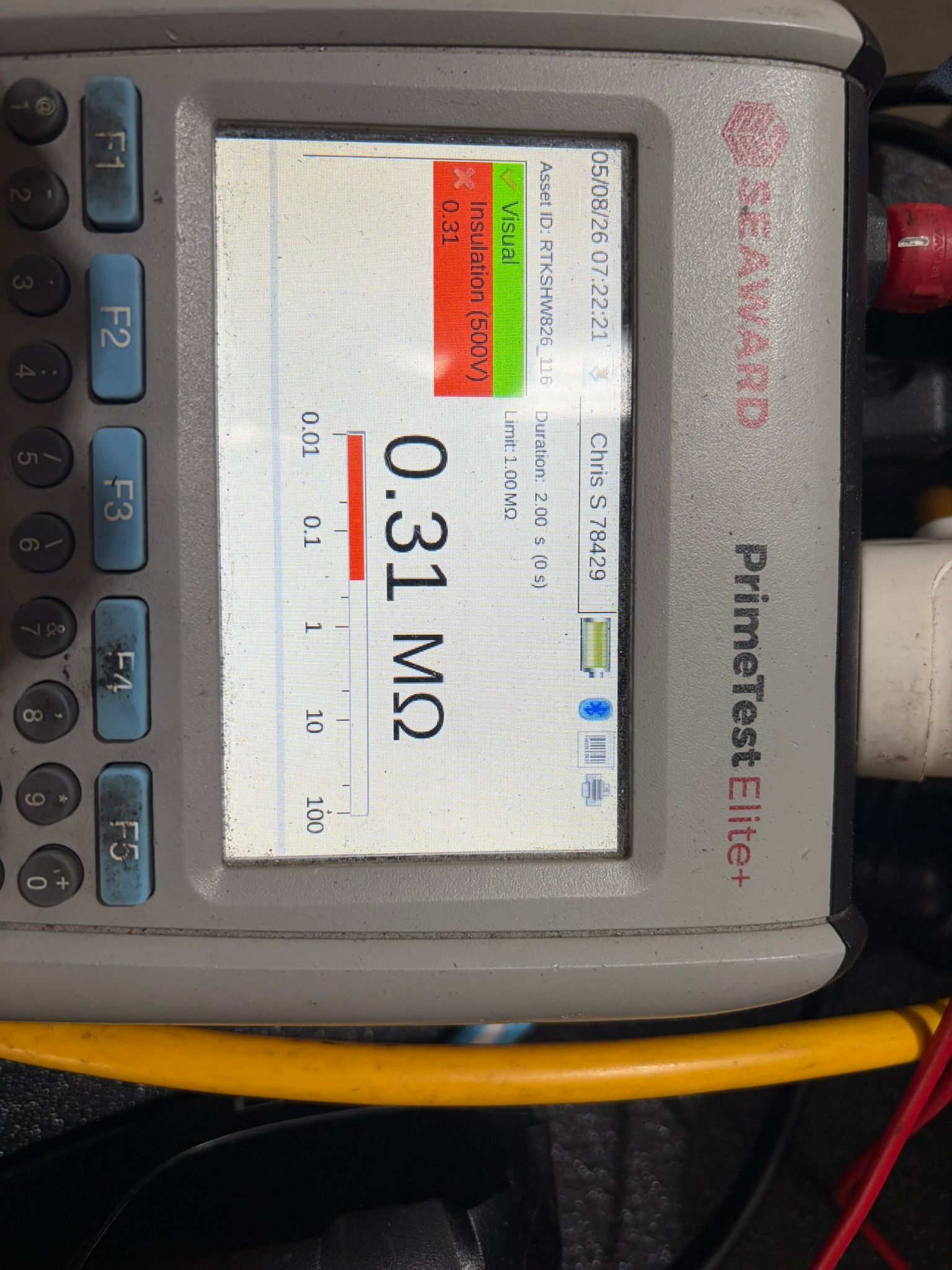
2. Instrument Testing
The technician selects tests appropriate to the equipment. Depending on its construction and classification, testing may include:
- Earth continuity
- Insulation resistance
- Polarity
- Leakage or protective conductor current
- Functional operation
- Cord and plug integrity
ABC Test Tag & Fire services equipment including 240V appliances, three-phase equipment and relevant low-voltage equipment within the applicable testing scope.
3. Tagging and Digital Identification
Equipment that passes the required inspection and testing receives a durable compliance tag. ABC Test Tag & Fire can provide QR-coded tags that connect the physical asset to its digital record.
A useful record identifies:
- Equipment or asset number
- Description and location
- Test date
- Results
- Tester identification
- Pass, fail or service outcome
- Next scheduled test date
- Defects and corrective actions
Digital compliance certificates reduce reliance on paper files and make it easier for managers to produce evidence during internal, client or workplace safety audits.
How Often Should Electrical Equipment Be Tested?
AS/NZS 3760:2022 uses a risk-based approach. The correct interval depends on the equipment, environment, frequency of use, likelihood of damage and consequences of failure.
Indicative schedules commonly applied in Queensland workplaces include:
| Workplace environment | Typical equipment | Indicative approach |
|---|---|---|
| Construction worksites | Power tools, leads, portable lighting | Frequent testing, commonly every three months |
| Workshops and manufacturing | Hand tools, cord sets and portable machinery | Commonly six-monthly, subject to risk |
| Warehouses and logistics facilities | Chargers, tools, cleaning equipment and leads | Six to twelve months, depending on conditions |
| General office areas | Computers, printers and kitchen appliances | Longer intervals may be suitable where risk is low |
| Outdoor or hostile environments | Equipment exposed to weather, dust, moisture or impact | Shorter intervals may be required |
These are not universal exemptions. A Lytton facility handling chemicals, operating workshops or exposing equipment to heavy mechanical use may require shorter intervals than a controlled office area within the same building.
The WorkSafe Queensland testing and tagging guidance should be considered alongside the current standard, workplace risk assessment and applicable statutory requirements.
What Is Included in RCD Testing Lytton?
Residual Current Devices, commonly known as safety switches, are designed to disconnect a circuit when they detect an imbalance in current. They are an important control against electric shock, but they must be tested.
RCD testing may include:
- Visual inspection
- Push-button functional testing
- Instrument testing of trip time and operating performance
- Identification of fixed and portable RCDs
- Recording of results and defects
- Recommendations for repair or replacement
The push-button test confirms that the test mechanism operates. It does not replace instrument testing, which measures performance using suitable test equipment.
The required frequency depends on the work type and risk. Construction, manufacturing, warehouse and office environments may have different testing schedules. Do not rely on a generic calendar interval without confirming the applicable Queensland requirements and site risk profile.
For further information, see the RCD testing Brisbane compliance guide.
What Happens When Equipment Fails?
Failed equipment must not remain available for general use.
The systematic response should be:
- Stop using the equipment.
- Disconnect or isolate it where safe to do so.
- Attach a clear Danger: Out of Service identification.
- Record the asset and defect.
- Arrange repair by an appropriately qualified person, or replace or dispose of the item.
- Retest repaired equipment before returning it to service.
Do not remove a failed tag without confirming that the defect has been addressed. Electrical repairs, alterations to fixed wiring and work inside switchboards must be performed by an appropriately licensed electrical worker.

What Does Fire Extinguisher Testing Lytton Include?
Fire extinguishers and fire blankets must remain visible, accessible, correctly located and maintained.
ABC Test Tag & Fire provides routine fire service and sales support, including:
- Six-monthly routine inspection of fire extinguishers in accordance with the applicable AS 1851:2012 maintenance requirements
- Six-monthly inspection of fire blankets
- Condition checks, safety seals and service tags
- Identification of defects or service requirements
- Replacement and sale of relevant safety equipment
- Digital records and service documentation
Fire equipment must not be blocked by pallets, stock, vehicles, racking or temporary materials. In a warehouse or transport facility, storage layouts change frequently, so access should be checked as part of routine site management: not only during a scheduled service.
For a broader explanation of commercial fire maintenance, review the AS 1851 compliance guide for Brisbane commercial buildings.
How Does Emergency Lighting Support Safe Egress?
Emergency lights and exit signs are intended to support evacuation when normal lighting fails. Their effectiveness depends on correct placement, visibility, illumination, battery operation and unobstructed exit routes.
ABC Test Tag & Fire provides annual emergency lighting and exit sign testing and sales in accordance with applicable AS/NZS 2293 requirements and the site’s building and fire safety regime.
Managers should confirm that:
- Exit signs are visible from the required approach
- Emergency lights are not obstructed by stock or racking
- Escape paths remain clear
- Exit doors can be opened as required
- Defective fittings are recorded and rectified
- Test results are retained in the site’s compliance records
Emergency egress is a building and life-safety issue. A compliant fitting cannot compensate for a blocked exit path.

Why Bundle Electrical, Fire and Exit-Light Services?
Coordinating separate contractors can create duplicated call-out costs, fragmented records and missed service dates. ABC Test Tag & Fire allows Lytton businesses to coordinate several compliance activities through one locally owned and fully insured provider.
Depending on the site and services required, bundled work may include:
- Electrical test and tag
- Fixed and portable RCD testing
- Fire extinguisher and fire blanket servicing
- Safety equipment sales
- Emergency lighting and exit sign testing
- QR-coded asset tagging
- Digital compliance certificates
Eligible customers can save up to 40% by combining services. The more services you book, the more you save. Businesses may also be eligible to earn QANTAS Business Rewards points on applicable services, subject to QANTAS Business Rewards terms and eligibility conditions.
ABC Test Tag & Fire services Brisbane, Ipswich and the Gold Coast, including industrial, commercial and regional workplaces.
Lytton Compliance Checklist
Use this checklist before your next scheduled inspection:
- Review the site-specific electrical risk assessment.
- Confirm test intervals for equipment, RCDs and work areas.
- Make portable equipment, switchboards and RCDs accessible.
- Remove damaged equipment from service immediately.
- Check fire extinguishers and blankets are visible and unobstructed.
- Keep exit paths and emergency doors clear.
- Confirm emergency lights and exit signs are scheduled for testing.
- Retain digital certificates, defect records and service reports.
- Confirm contractors are competent, licensed where required and insured.
- Review compliance after incidents, relocation, refurbishment or process changes.
Frequently Asked Questions About Lytton Safety Compliance
Is test and tag legally required for every item in a Lytton workplace?
Requirements depend on the equipment, work type, environment and applicable Queensland duties. A risk-based inspection and testing program should identify which equipment requires testing and the appropriate interval.
Is AS/NZS 3760:2022 the same as Queensland legislation?
No. AS/NZS 3760:2022 is a technical standard for in-service electrical equipment and RCD testing. Queensland legislation establishes enforceable workplace and electrical safety duties.
What should we do if a power tool fails testing?
Immediately isolate and label it out of service. Arrange appropriate repair or replacement, then retest the equipment before use.
Can one contractor test our electrical and fire equipment?
ABC Test Tag & Fire provides coordinated electrical test and tag, RCD testing, fire equipment servicing and emergency lighting services, subject to the equipment and site requirements.
How much can Lytton businesses save by bundling services?
Eligible customers can save up to 40% when combining services. The exact saving depends on the scope of work. The more services you book, the more you save.
Do we earn QANTAS points?
Eligible customers may earn QANTAS Business Rewards points on applicable services, subject to the relevant QANTAS Business Rewards terms and conditions.
Book Lytton Industrial Safety Compliance Services
Do not wait for an overdue tag, failed audit or inaccessible fire extinguisher to identify a compliance gap.
Contact ABC Test Tag & Fire on 1300 66 94 65 to arrange test and tag Lytton, RCD testing Lytton, fire extinguisher testing Lytton and emergency lighting services. We provide practical, documented compliance support for businesses throughout Lytton, Brisbane, Ipswich and the Gold Coast.