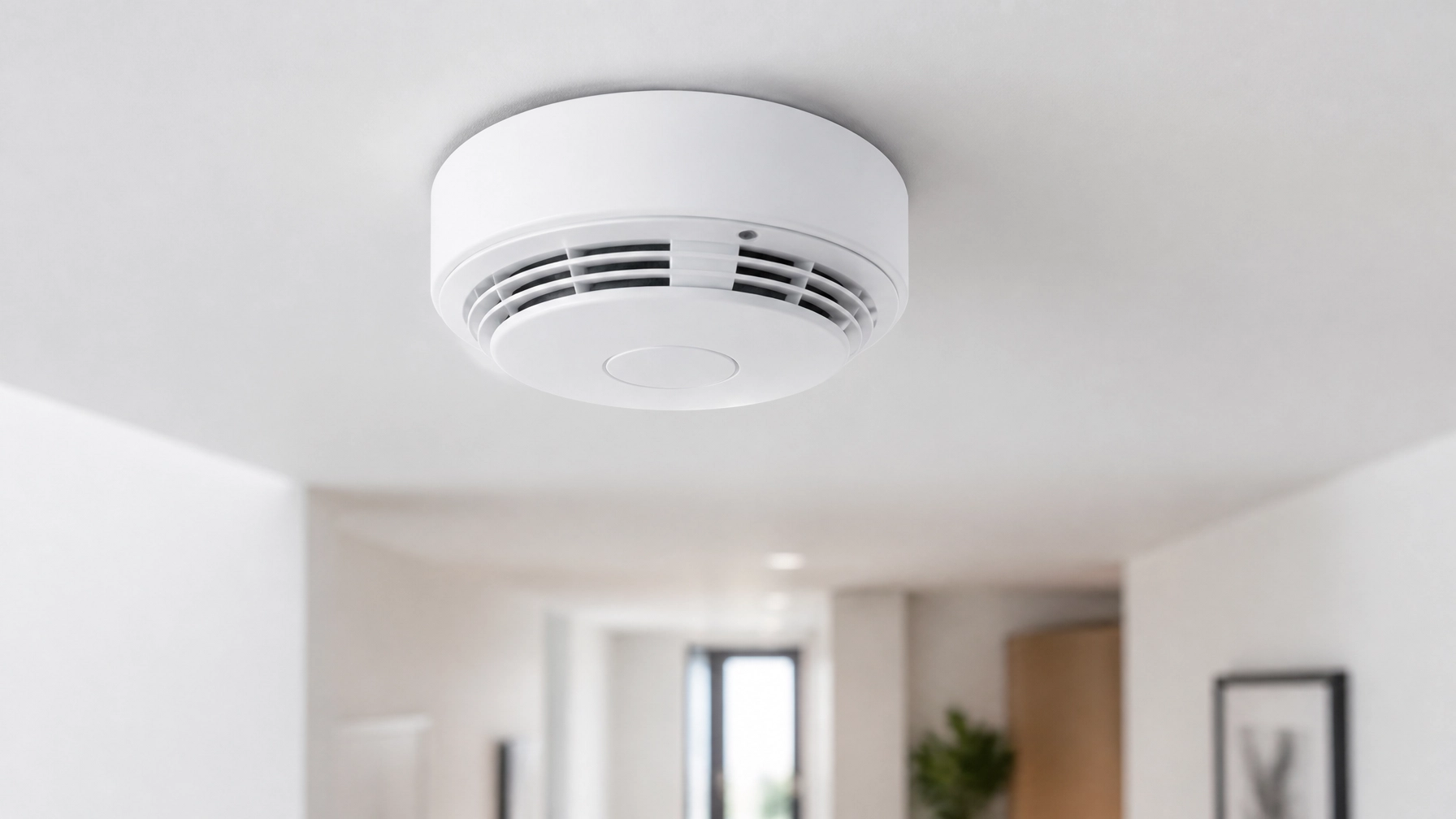
As the calendar progresses toward January 1, 2027, QLD home owners across Brisbane, Ipswich, and the Gold Coast are facing a critical regulatory threshold.
While initial legislative changes in 2022 mandated smoke alarm upgrades for new tenancies and renewals, the upcoming 2027 deadline serves as the final compliance ceiling for all domestic dwellings in Queensland. Failure to adhere to these stringent safety standards does not merely invite administrative penalties; it creates significant legal exposure and potentially invalidates insurance coverage.
The Queensland Fire and Emergency Services (QFES) legislation is designed to maximize early detection and safe egress. For property owners, the complexity of these requirements: ranging from specific sensor technology to interconnection protocols: necessitates a systematic approach to compliance.
What is the 2027 Smoke Alarm Legislation?
The Fire and Emergency Services Act 1990 and the Building Fire Safety Regulation 2008 underwent significant amendments to improve residential safety. By January 1, 2027, every home in Queensland must be equipped with interconnected photoelectric smoke alarms. For home owners, this requirement has been active for any property leased or sold since 2022, but the 2027 date marks the point where no residential property in the state can legally remain non-compliant.
To ensure your investment portfolio meets the required electrical safety compliance Brisbane standards, here are the five essential actions every home owner must take before the deadline.
1. Verify Compliance with AS 3786:2014 Standards
The cornerstone of the new legislation is the transition to photoelectric technology. Unlike older ionisation alarms, which detect flaming fires, photoelectric alarms are far more effective at sensing smouldering fires: the type most likely to occur in residential settings.
Technical Requirements:
- Photoelectric Only: All installed devices must be photoelectric. Ionisation alarms or dual-sensor alarms that include ionisation components are no longer compliant.
- Australian Standards: Every alarm must be manufactured and tested in accordance with AS 3786:2014. This marking must be clearly visible on the device.
- Lifespan Management: Smoke alarms have a maximum operational life of 10 years. Any device manufactured more than a decade ago must be replaced immediately, regardless of its current functional status.
Home owners must inspect the "Date of Manufacture" on every unit. If the device is nearing its ten-year limit, proactive replacement is the only method to ensure continuous compliance throughout the next tenancy period.
2. Ensure Strategic Placement Across All Levels and Bedrooms
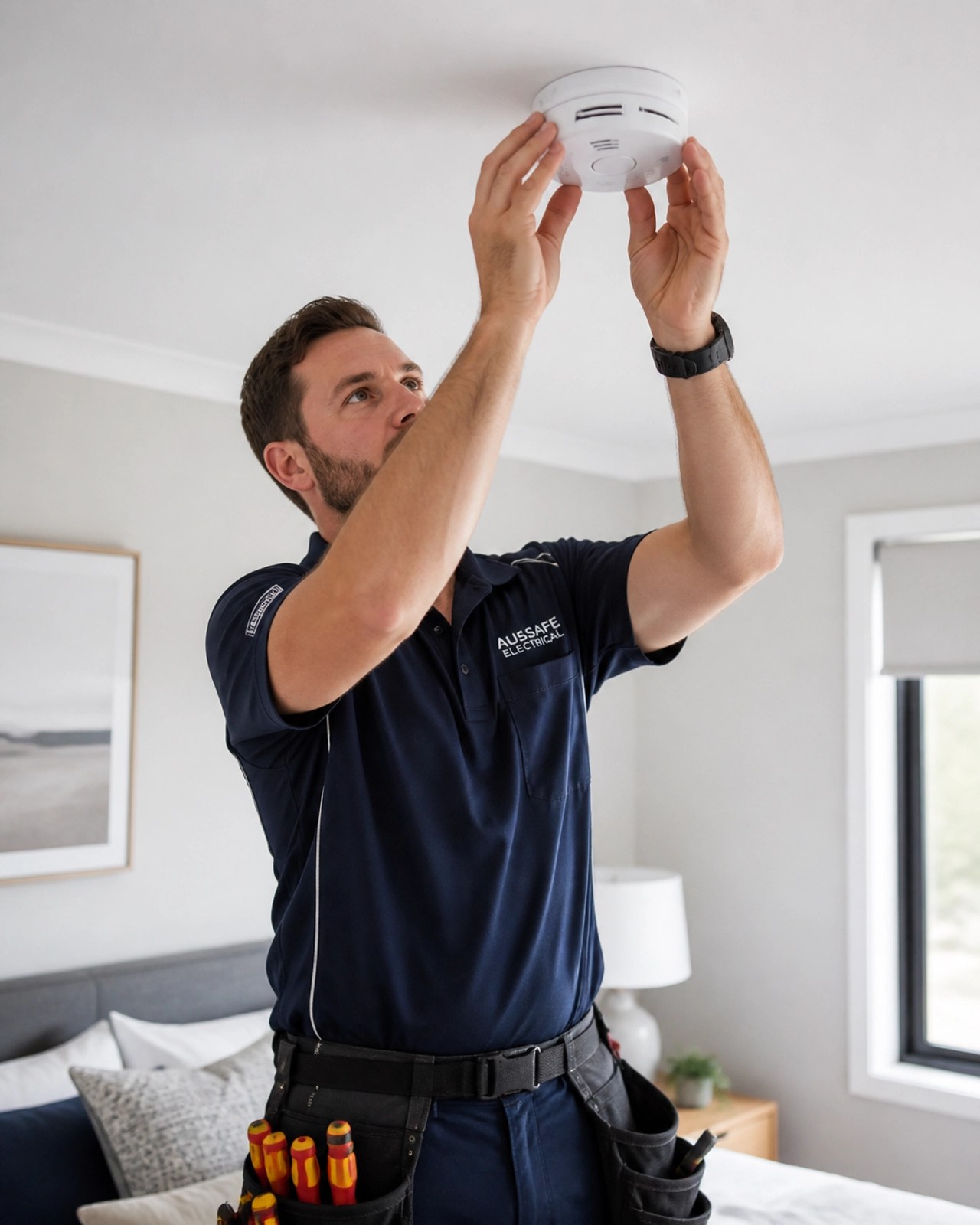
The "where" is as critical as the "what." The legislation specifies exact locations to ensure that an alarm will sound in the vicinity of occupants regardless of where a fire originates.
Where are smoke alarms required?
- Inside Every Bedroom: An alarm must be installed in every room used for sleeping.
- In Connecting Hallways: Alarms must be placed in hallways that connect bedrooms to the rest of the dwelling.
- Between Bedrooms: If there is no hallway, the alarm must be placed in the area between the bedrooms and the rest of the storey.
- Every Storey: There must be at least one alarm on every level of the property, even if that level contains no bedrooms. These should be placed in the most likely path of travel to an exit.
For properties in Ipswich or Brisbane's suburbs, multi-storey townhouses often require complex layouts to meet these spatial requirements. Misplacement by even a few centimeters: such as being too close to a ceiling fan or air conditioning vent: can render an alarm non-compliant.
3. Implement Mandatory Interconnection Protocols
What does "interconnected" actually mean? It means that if one smoke alarm in the property is triggered, every other required alarm in the dwelling must also sound simultaneously. This ensures that a fire starting in a remote area (like a garage or downstairs living room) will immediately alert residents sleeping upstairs.
Methods of Interconnection:
- Hardwired (240V): Alarms are physically connected via electrical wiring. This is mandatory for new builds or if the existing property already utilizes hardwired alarms.
- Wireless (RF): Alarms communicate via Radio Frequency. This is a common solution for retrofitting older properties where running new wires through walls is cost-prohibitive.
All interconnected alarms must be powered by either a 240V mains supply with a backup battery or a non-removable 10-year lithium battery. Standard 9V replaceable batteries are no longer sufficient as a primary power source for compliant installations.
4. Adhere to the 30-Day Pre-Tenancy Inspection Rule
Compliance is not a "set and forget" obligation. Under Queensland law, home owners have specific maintenance duties that coincide with tenancy changes.
"The lessor must test and clean each smoke alarm within 30 days before the start of a new tenancy or a tenancy renewal." : Residential Tenancies and Rooming Accommodation Act 2008.
Maintenance Checklist for Home Owners:
- Testing: Physically pressing the test button to ensure the audible signal and interconnection are functioning.
- Cleaning: Removing dust and insects that can cause false alarms or sensor failure.
- Battery Replacement: Replacing backup batteries if they are nearing expiration (for 240V units).
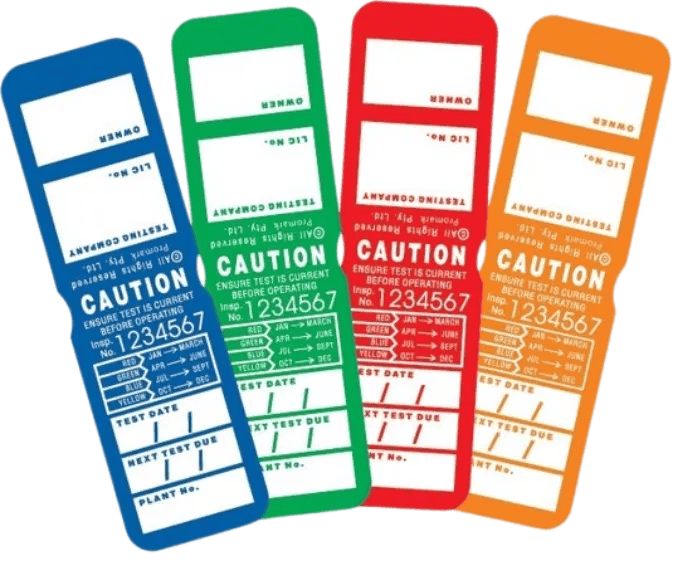
- Documentation: Maintaining a digital log of the service.
At ABC Test Tag & Fire, we provide digital compliance certificates and QR-coded reporting, ensuring you have an immutable audit trail should a dispute or incident occur.
5. Mitigation of Legal and Insurance Risks
The financial implications of ignoring the January 1, 2027 deadline extend far beyond a simple fine. While non-compliance can result in penalties of up to 5 units, the greater risk lies in civil liability and insurance repudiation.
The Consequences of Non-Compliance:
| Risk Factor | Impact on Home Owner |
|---|---|
| Insurance Validity | Most home owner insurance policies require the property to meet all statutory safety regulations. A fire in a non-compliant property may lead to a total claim denial. |
| Legal Liability | If a tenant is injured or property is damaged due to faulty or missing alarms, the home owner can be held personally liable for negligence. |
| Property Management | Professional property managers may refuse to represent a property that does not meet the AS 3786:2014 standard. |
| Sales Hurdles | You cannot legally sell a property in Queensland without a compliant smoke alarm system in place. |
To avoid the "deadline rush": where hardware prices spike and technician availability drops: smart property owners are acting now.
How ABC Test Tag & Fire Facilitates Compliance?
Navigating the intersection of electrical safety and fire regulations requires professional expertise. ABC Test Tag & Fire offers a comprehensive solution for Brisbane and Ipswich home owners seeking to secure their properties before the 2027 deadline.
The Benefits of Professional Compliance:
- Cost Efficiency: By bundling smoke alarm testing with fire service and electrical RCD testing, our clients typically save 20-40% compared to hiring separate contractors.
- Regulatory Expertise: Our technicians are well-versed in AS 3786:2014 and the QLD Fire and Emergency Services Act, ensuring every installation is audit-ready.
- Hassle-Free Reporting: Receive instant digital compliance certificates that can be forwarded directly to your property manager or insurer.
- Qantas Business Rewards: We are the only provider in the region allowing you to earn Qantas points on your compliance spend: turning a mandatory expense into a travel benefit.
Act Now Before the Deadline Rush
The demand for compliant smoke alarm installations is expected to peak in late 2026, leading to significant delays and increased labor costs. Ensure your Brisbane or Ipswich rental property is protected, compliant, and legally tenanted.
Don’t wait for the deadline. Contact ABC Test Tag & Fire today for an obligation-free quote and a comprehensive compliance audit of your investment property.