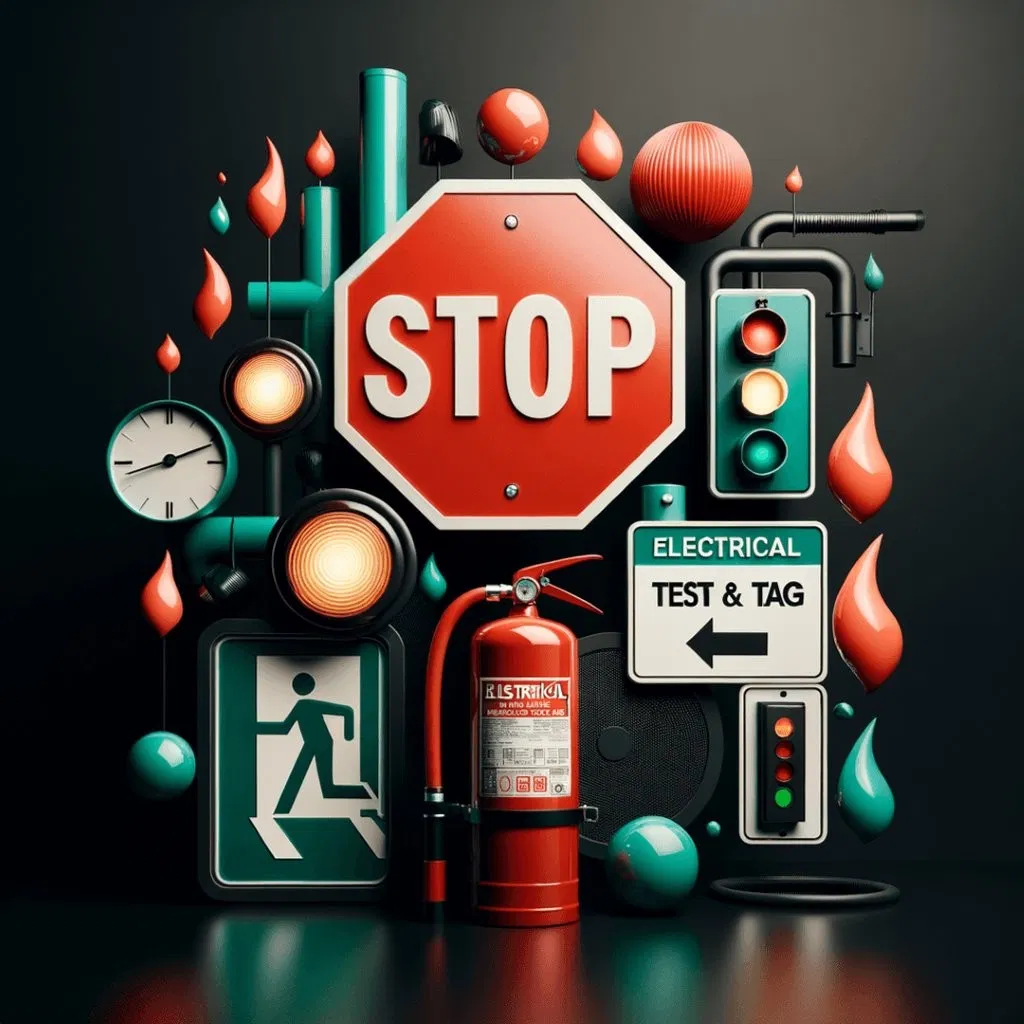
Operating a commercial enterprise in Sunnybank, Brisbane requires strict adherence to Queensland’s robust regulatory framework governing workplace health, safety, and operational compliance. From bustling retail precincts along Mains Road to light industrial warehouses and corporate offices, Persons Conducting a Business or Undertaking (PCBUs) face profound legal obligations. Failure to maintain mandatory safety standards exposes organizations not only to catastrophic operational risks, such as electrical shock or structural fire, but also to severe statutory penalties, voided insurance policies, and potential criminal liability under the Electrical Safety Act 2002 and the Building Fire Safety Regulation 2008.
Despite the indisputable gravity of these regulations, many local facility managers navigate compliance through a fragmented approach: engaging separate contractors for electrical testing, residual current device (RCD) verification, emergency lighting inspections, and fire extinguisher servicing. This disjointed methodology introduces administrative friction, inflated service overheads, and scheduling oversights. By transitioning to an integrated compliance strategy, Sunnybank businesses are systematically reducing their annual safety expenditure by 20% to 40% while streamlining their audit trails.
What Are Your Statutory Obligations Under Queensland Law?
To establish an effective risk-mitigation framework, organizational leaders must first understand the precise statutory instruments governing their premises. Workplace safety in Queensland is not a discretionary administrative exercise; it is a legally mandated protocol enforced by Workplace Health and Safety Queensland (WHSQ) and the Queensland Fire and Emergency Services (QFES).
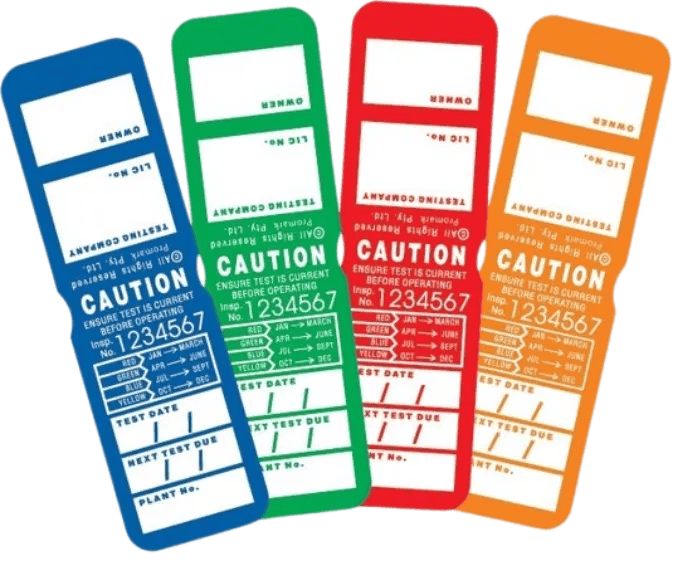
Under Australian Standard AS/NZS 3760 (In-service safety inspection and testing of electrical equipment) and the Electrical Safety Regulation 2013, businesses must ensure that all portable electrical appliances, machinery, and electrical installations are systematically inspected, tested, and tagged by a competent person. Concurrently, fire protection systems must comply with AS 1851:2012 (Routine service of fire protection systems and equipment), requiring routine six-monthly and annual servicing of fire extinguishers, blankets, and hoses. Furthermore, emergency escape routes must adhere to AS/NZS 2293, mandating rigorous half-yearly discharge testing of emergency and exit lighting systems.
"A PCBU must manage risks to health and safety associated with electrical risks at the workplace, ensuring that electrical equipment is regularly inspected, tested, and maintained to prevent injury or property damage." : Electrical Safety Regulation 2013
To summarize these multi-tiered regulatory requirements, facility managers should reference the standard testing frequencies outlined below:
| Compliance Category | Applicable Standard | Statutory Frequency | Primary Responsibility |
|---|---|---|---|
| Portable Electrical Testing | AS/NZS 3760 | Every 6 to 12 months (depending on environment) | Competent Testing Technician |
| RCD Safety Switch Testing | AS/NZS 3760 / AS/NZS 3000 | 6-monthly push-button; 12-monthly instrument test | Qualified Electrical Technician |
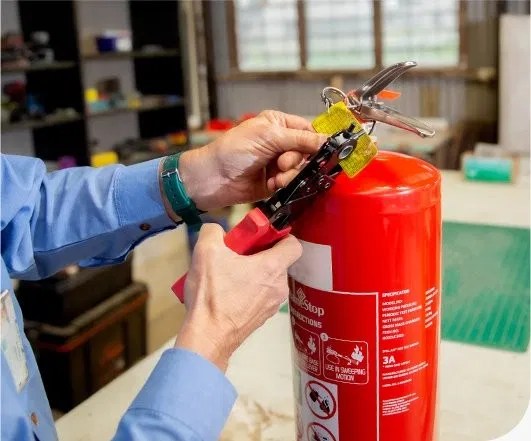
| Fire Extinguishers & Blankets | AS 1851:2012 | 6-monthly routine service and annual pressure testing | Certified Fire Technician |
| Emergency & Exit Lighting | AS/NZS 2293 | 6-monthly 90-minute discharge test | Accredited Compliance Inspector |
The Economic Impact of Fragmented Compliance in Sunnybank
Why do so many commercial operators in Sunnybank inadvertently overspend on mandatory safety protocols? The answer lies in contractor fragmentation. When a business contracts one provider for electrical test and tag services, another specialized technician for RCD testing, and a third vendor for annual fire extinguisher certification, they are subjected to multiple call-out fees, redundant administrative processing charges, and overlapping technician site visits.
Each separate contractor incurs independent overhead costs that are ultimately billed back to the business. Moreover, fragmented scheduling frequently results in operational downtime. If an electrical technician arrives on Monday, interrupting workflow, and a fire safety inspector arrives on Wednesday for a separate assessment, the cumulative disruption to staff productivity is magnified.
From an administrative perspective, managing disparate invoices, expiration dates, and compliance logbooks across multiple vendors creates significant vulnerability. If a compliance certificate is misplaced or an inspection interval is missed due to poor record-keeping, the organization falls out of statutory alignment. In the event of a workplace audit or insurance claim investigation, this administrative disarray can result in denied payouts and regulatory fines.
What is the Mechanics of Bundling Compliance Services?
How does service bundling neutralize these financial and administrative inefficiencies? Consolidating all workplace safety requirements under a single accredited provider: such as ABC Test Tag & Fire: transforms compliance from a logistical burden into a streamlined, cost-effective asset management system.
When electrical testing, RCD verification, fire extinguisher maintenance, and emergency exit light audits are performed during a single synchronized site visit, operational overhead plummets. Service providers can eliminate redundant call-out fees, optimize technician scheduling, and pass those direct savings onto the client. This structural integration is the primary driver behind how Sunnybank enterprises are achieving verified cost savings of 20% to 40% on their annual safety budgets.
Furthermore, bundled compliance guarantees uniform documentation. Instead of navigating conflicting file formats and disparate paper logbooks, facility managers receive centralized, cloud-accessible digital compliance certificates. QR-coded electrical tags provide instant scanning capabilities for auditing personnel, verifying test dates, asset numbers, and re-test due dates with absolute precision.
What Practical Steps Must Facility Managers Implement Today?
To capitalize on these efficiencies and ensure absolute regulatory compliance, facility managers and business owners in Sunnybank must execute a systematic, step-by-step risk management strategy:
- Conduct a Comprehensive Site Asset Audit: Compile an exhaustive inventory of all portable electrical appliances, three-phase equipment, safety switches, emergency exit signs, and fire suppression assets across the premises.
- Review Current Vendor Contracts: Examine existing service agreements to identify expiration dates, hidden call-out fees, and overlapping contractor invoices.
- Engage an Integrated Compliance Provider: Partner with a fully insured, locally owned specialist capable of delivering both electrical and fire safety services under one roof, such as ABC Test Tag & Fire.
- Establish a Synchronized Service Schedule: Coordinate a unified testing calendar that aligns AS/NZS 3760 electrical cycles with AS1851 fire safety intervals, ensuring zero missed deadlines.
- Implement Digital Reporting and Archiving: Transition away from vulnerable paper logbooks to secure, cloud-based digital compliance certificates and QR-coded asset tracking.
- Leverage Reward Programs: Utilize service providers that offer commercial incentives, such as the ability to earn Qantas Points on essential workplace safety expenditure.
Securing Your Workplace Future in Sunnybank
Compliance is not merely a bureaucratic checkbox; it is the fundamental bedrock of organizational resilience and personnel protection. By abandoning fragmented contractor models in favor of a comprehensive, bundled safety regime, Sunnybank businesses are eliminating unnecessary administrative overhead, cutting compliance expenditure by up to 40%, and fortifying their legal standing against WHSQ and QFES scrutiny.
Protect your workforce, safeguard your commercial assets, and optimize your operational expenditure today. Visit ABC Test Tag & Fire to arrange a comprehensive compliance assessment tailored specifically to your Sunnybank facility.