Redbank Plains businesses operate across a diverse commercial environment, including warehouses, workshops, retail premises, offices, construction sites and trade-based facilities. Each workplace has different electrical loads, equipment risks and fire-protection requirements. However, every business has the same fundamental obligation: identify hazards, maintain safety equipment and retain evidence that compliance activities have been completed.
For local businesses, test and tag Redbank Plains, RCD testing Redbank Plains and fire extinguisher testing Redbank Plains should be managed as part of a systematic compliance program, not as separate tasks arranged only when an inspection is approaching.
ABC Test Tag & Fire provides integrated electrical, fire and emergency-lighting services throughout Redbank Plains, Ipswich and Brisbane. Our locally owned and fully insured team can complete multiple compliance services during one scheduled visit, reducing disruption and delivering digital records for your business.
What Workplace Safety Requirements Apply to Redbank Plains Businesses?
Redbank Plains does not have a separate testing regime simply because of its suburb. Requirements are determined by the workplace activity, equipment type, operating environment, building classification and applicable Queensland legislation.
A warehouse using portable machinery has a different risk profile from a professional office. A construction site has more demanding electrical testing frequencies than a retail shop. A workshop may have welding equipment, extension leads, portable power tools, flammable liquids and industrial fans that require careful inspection.
Relevant frameworks may include:
- The Queensland Work Health and Safety Act 2011 and Work Health and Safety Regulation 2011.
- AS/NZS 3760 for in-service inspection and testing of electrical equipment and RCDs.
- AS/NZS 3012 for electrical installations and equipment on construction and demolition sites.
- AS1851:2012 for routine service and maintenance of fire-protection equipment.
- AS/NZS 2293 for emergency lighting and exit signs.
- Queensland building and fire-safety requirements applying to the premises.
Queensland WorkSafe guidance explains that testing and tagging intervals depend on the workplace environment, the type of equipment and the level of risk. The applicable statutory requirements should be confirmed for the particular workplace rather than assumed from a generic annual schedule.
Read the Queensland guidance on testing and tagging electrical equipment.
How Often Is Electrical Test and Tag Required in Redbank Plains?
The purpose of electrical test and tag is to identify damage, insulation faults, earthing problems, exposed conductors and other defects before equipment causes injury, fire or operational failure.
ABC Test Tag & Fire conducts visual inspections and electrical testing on 240V, three-phase and low-voltage equipment, including portable appliances, power tools, extension leads, portable outlet devices and relevant workplace machinery.
Typical Queensland testing intervals include:
| Workplace or equipment environment | Common maximum test interval |
|---|---|
| Office equipment without a safety switch | Up to five years |
| Service work equipment without a safety switch | Generally 12 months |
| Manufacturing equipment, double-insulated | Generally 12 months |
| Manufacturing equipment, not double-insulated | Generally six months |
| Construction equipment and leads | Often three to six months, depending on equipment and application |
These are practical examples, not a substitute for a site-specific assessment. Equipment that is frequently moved, exposed to dust, moisture, chemicals, vibration or physical impact may require closer management.
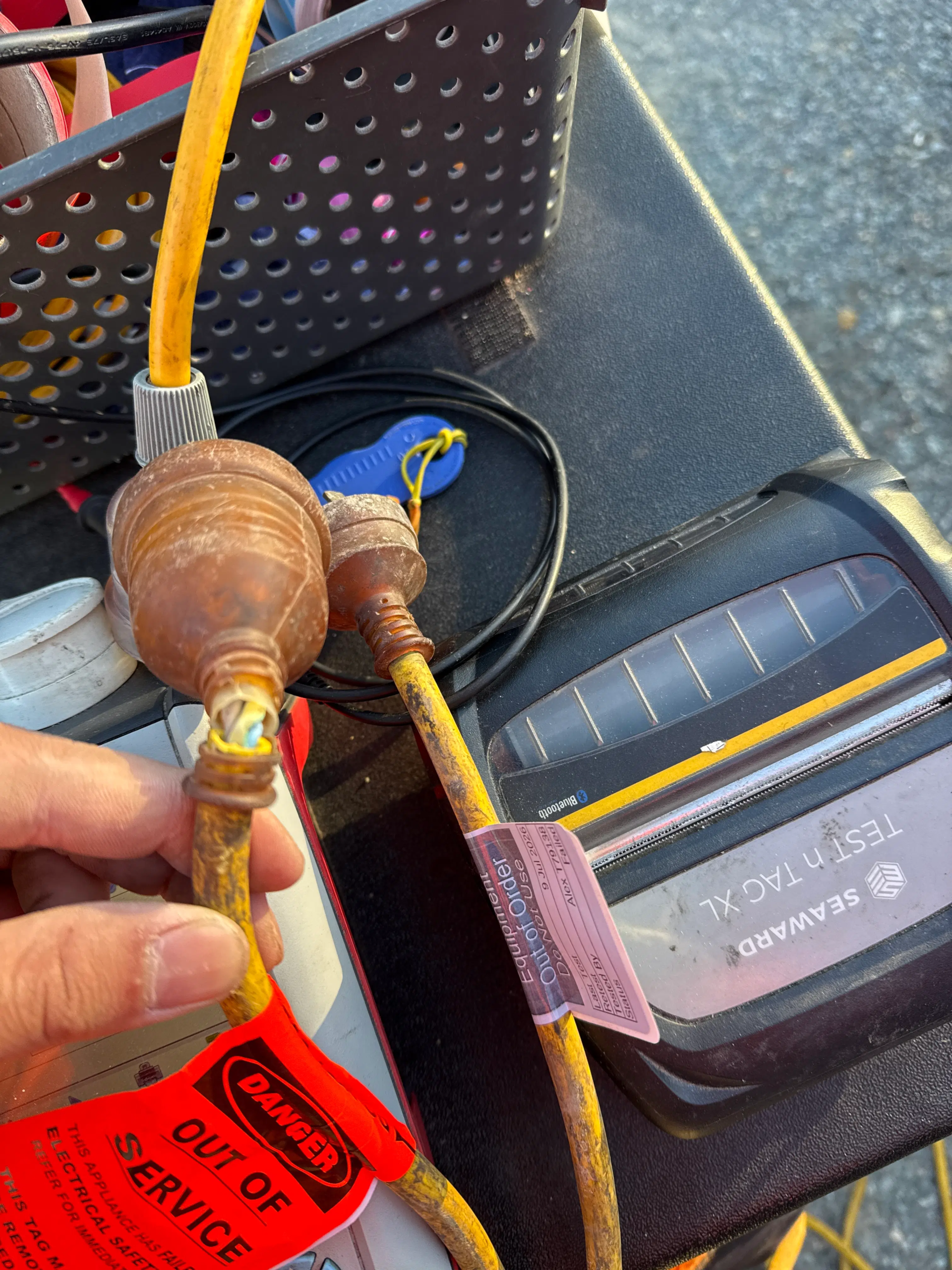
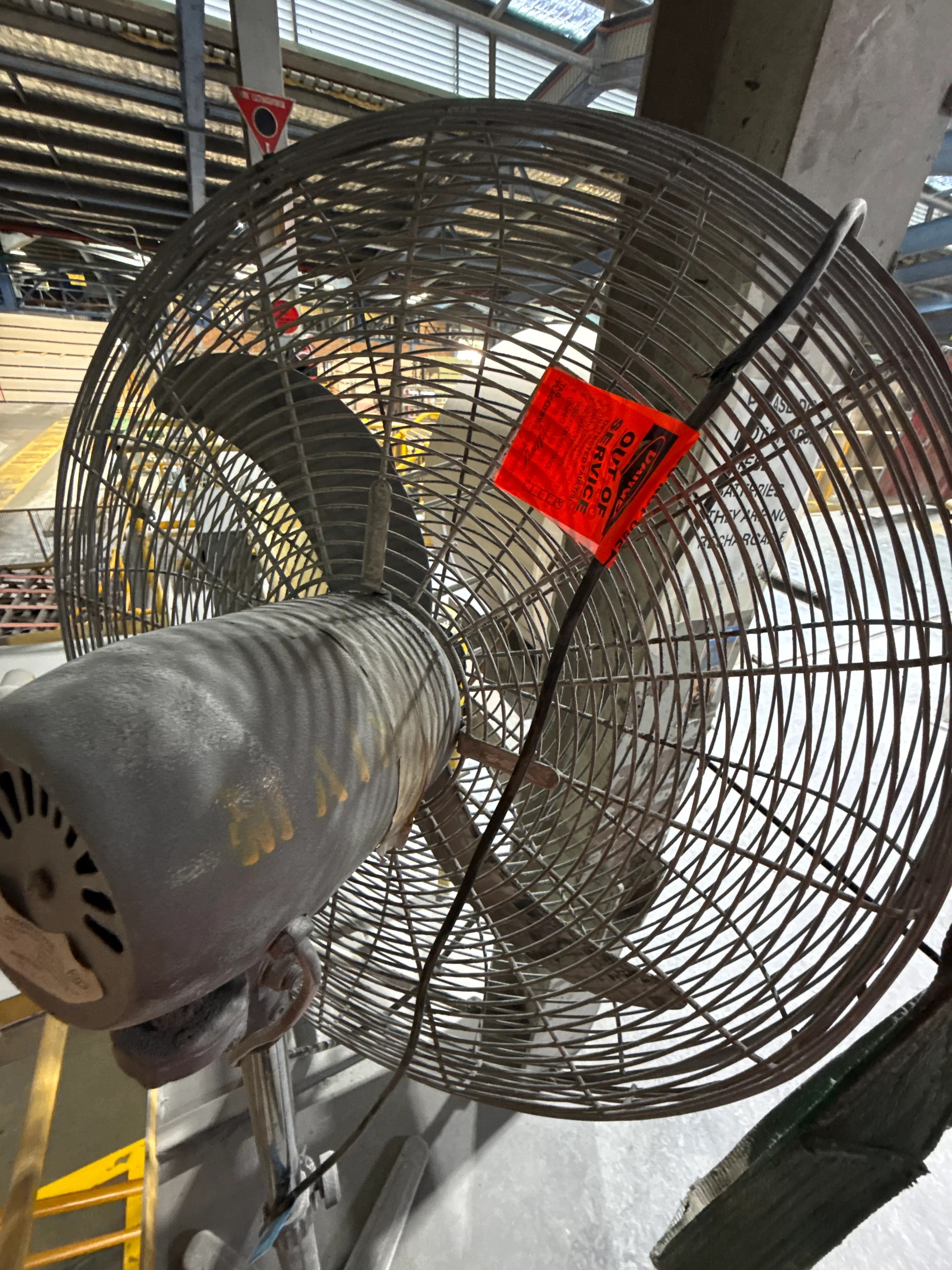
If an item fails inspection, it should be removed from service immediately and marked with an out-of-service or danger tag. Do not allow a damaged lead, fan, drill, kettle or power board to remain available for use while waiting for repairs.
What Are the RCD Testing Frequencies for Queensland Workplaces?
Residual Current Devices, commonly called safety switches, are designed to disconnect power when they detect an electrical imbalance. They are an important risk-control measure, but an RCD cannot be assumed to work correctly simply because the test button appears intact.
RCD testing generally includes:
- A visual inspection of the device, enclosure and associated wiring.
- A push-button test at the required interval.
- Operating-time and trip-current testing using suitable test equipment.
- Recording of results, defects and corrective actions.
- Confirmation of the next due date.
Typical frequency examples include:
- Construction sites: portable RCD push-button testing daily or before use, whichever is longer, with operating-time/current testing commonly required every three months. Fixed RCDs may require monthly push-button testing and annual operating-time/current testing.
- Office workplaces: fixed RCD push-button testing commonly every six months, with operating-time/current testing generally every two years. Portable devices may require more frequent push-button testing.
- Service workplaces: fixed and portable RCD frequencies depend on the equipment and activity, with six-monthly and two-yearly intervals commonly applying in lower-risk situations.
- Manufacturing workplaces: fixed RCD push-button testing may be required every six months, with operating-time/current testing commonly annual. Portable RCD arrangements require particular care because some portable safety switches are not permitted in manufacturing environments.
The Queensland statutory requirements take precedence where they differ from a general interpretation of AS/NZS 3760. Businesses should maintain a documented schedule that identifies each RCD, its location, test method, result and next due date.
See our RCD testing Brisbane compliance guide for additional information.
What Fire Services Are Required for Redbank Plains Businesses?
Fire equipment must remain accessible, correctly located, suitable for the hazard and maintained in working condition. A fire extinguisher with an overdue service tag, damaged hose or incorrect classification may not provide effective protection when required.
ABC Test Tag & Fire provides fire extinguisher test and tag, fire blanket servicing and fire-safety equipment sales for Redbank Plains businesses. Routine servicing is completed in accordance with AS1851:2012, including relevant six-monthly inspections and additional annual or five-yearly maintenance where required by the equipment and installation.
Fire services may include inspection of:
- Water, foam, dry chemical powder and carbon dioxide extinguishers.
- Fire blankets and associated identification signage.
- Fire-hose reels and other fire equipment where included within the site scope.
- Mounting brackets, access, labels, tamper seals, gauges and physical condition.
- Service records, maintenance tags and corrective-action requirements.
A routine visit does not eliminate the need for periodic major maintenance or pressure testing. The correct service frequency depends on the equipment type, age, condition and applicable fire-safety requirements.

How Does Emergency and Exit Light Testing Protect Occupants?
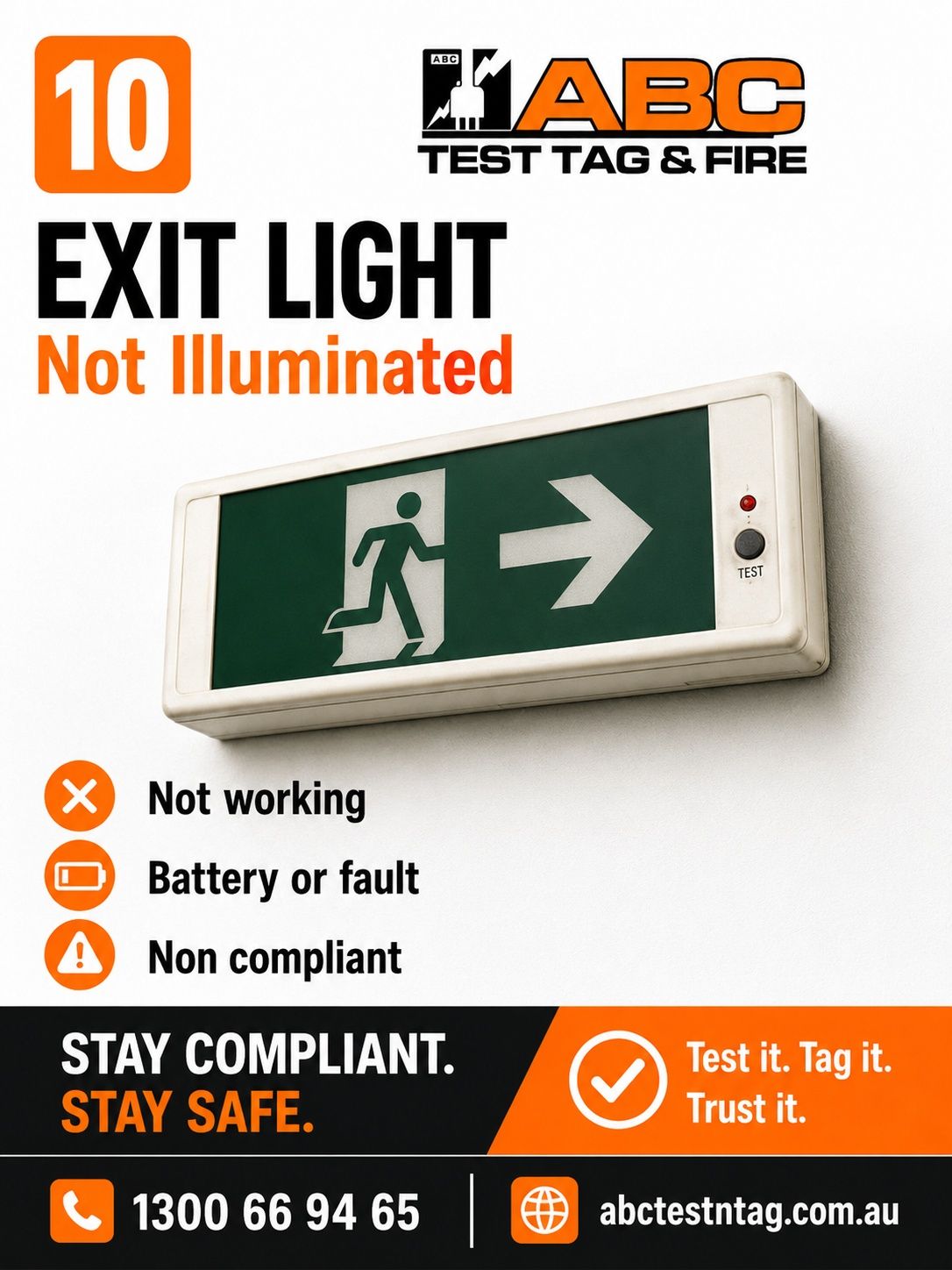
Emergency lighting and illuminated exit signs are essential during a power failure, smoke event or evacuation. A sign that is present but not illuminated cannot perform its intended safety function.
ABC Test Tag & Fire provides exit light testing and sales in accordance with AS/NZS 2293. Services include function testing, battery and fitting checks, duration testing where applicable, identification of failed units and recommendations for repair or replacement.
Businesses should plan for:
- Routine checks required by the applicable building and maintenance regime.
- Annual exit and emergency-light testing.
- Additional six-monthly inspections where required by the installation or applicable maintenance schedule.
- Accessible logbooks or electronic records.
- Prompt rectification of failed batteries, lamps, fittings or signage.
Queensland fire-safety obligations also require occupiers and responsible persons to maintain emergency procedures and evacuation arrangements. Physical equipment testing and emergency-plan testing are separate responsibilities, and both should be documented.
What Does a Non-Compliant Item Cost a Redbank Plains Business?
There is no single universal fine charged per failed appliance or overdue extinguisher. The financial impact depends on the defect, the workplace circumstances, the regulator’s response and whether an incident has occurred.
The immediate cost may include:
- Removing equipment from service.
- Hiring replacement equipment.
- Repairs, replacement or urgent call-out charges.
- Production delays and lost operating time.
- Additional audit or inspection requirements.
- Insurance and liability complications.
- Potential enforcement action where legal duties have not been met.
A failed item should therefore be treated as a risk-control finding, not an inconvenience. Correct it, record the action and prevent the same defect from recurring.
Why Bundle Test and Tag, RCD Testing and Fire Services?
Coordinating compliance activities through separate providers can create duplicated travel charges, multiple appointments and inconsistent records. A bundled visit allows businesses to prepare one site access plan and address several obligations during the same attendance.
ABC Test Tag & Fire offers a bundled package with up to 40% saving when businesses combine:
- Electrical test and tag.
- RCD testing.
- Six-monthly fire extinguisher and fire blanket servicing.
- Annual exit and emergency-light testing.
Clients receive durable QR-coded tags, digital compliance certificates and fast reporting that helps managers track assets, failed items, due dates and completed corrective actions. QR-coded records are particularly useful for warehouses, workshops and multi-site operators where equipment moves between locations.
Businesses can also earn QANTAS points on services, subject to applicable program terms.
How Can Redbank Plains Businesses Prepare for a Compliance Visit?
Before booking, nominate a responsible person and complete these practical steps:
- Identify all portable electrical equipment, extension leads and RCDs.
- Separate equipment that is damaged, inaccessible or no longer used.
- Make fire extinguishers, blankets, hose reels and exit signs accessible.
- Provide previous test reports, fire logs and building compliance records.
- Advise the technician about construction, manufacturing, cleaning or high-risk activities.
- Schedule testing outside peak operational periods where possible.
- Rectify failed items promptly and retain evidence of completion.
Late 2026 and 2027 bookings are filling quickly as Redbank Plains, Ipswich and Brisbane businesses plan annual audits, shutdown periods and new compliance cycles.
Book Test and Tag and Fire Services in Redbank Plains
ABC Test Tag & Fire is a locally owned, fully insured provider of workplace electrical and fire safety compliance services across Redbank Plains, Ipswich and Brisbane. We provide test and tag services, RCD testing, fire extinguisher and blanket servicing, fire equipment sales, emergency-light and exit-sign testing, QR-coded tags and digital compliance certificates.
For a coordinated inspection and a bundled saving of up to 40%, call 1300 66 94 65 or visit ABC Test Tag & Fire. Book early to secure a late-2026 or 2027 appointment and reduce the cost and downtime associated with managing compliance separately.
Important Compliance Note
Testing frequencies and maintenance obligations can vary according to workplace classification, equipment, building approval conditions and current Queensland requirements. This article is general information only. Obtain a site-specific assessment from a suitably qualified compliance provider and consult the relevant regulator or standard where necessary.