SEO title: Wet Season Electrical Safety Brisbane | Test and Tag & RCD Checks
Suggested meta description: Prepare your Brisbane or Ipswich workplace for storms and flooding with test and tag, RCD testing, fire safety and emergency-lighting checks aligned with Queensland requirements.
Target keywords: wet season electrical safety Brisbane, test and tag Brisbane, RCD testing Brisbane, electrical safety compliance Brisbane, workplace electrical safety Ipswich
Queensland’s wet season creates additional electrical risks for offices, warehouses, workshops, construction sites, logistics yards and retail businesses. Storms, flooding, wind-driven rain, temporary power arrangements and water-damaged equipment can compromise electrical safety, even when an appliance previously carried a current test tag.
A documented wet-season review should therefore form part of your workplace safety and compliance program. It should consider the condition, location, use and exposure of electrical equipment: not simply whether a testing date has passed.
ABC Test Tag & Fire provides electrical test and tag, RCD testing, fire equipment servicing and emergency-lighting compliance services across Brisbane, Ipswich, the Gold Coast and surrounding suburbs.
Why Does Wet Weather Increase Electrical Risk?
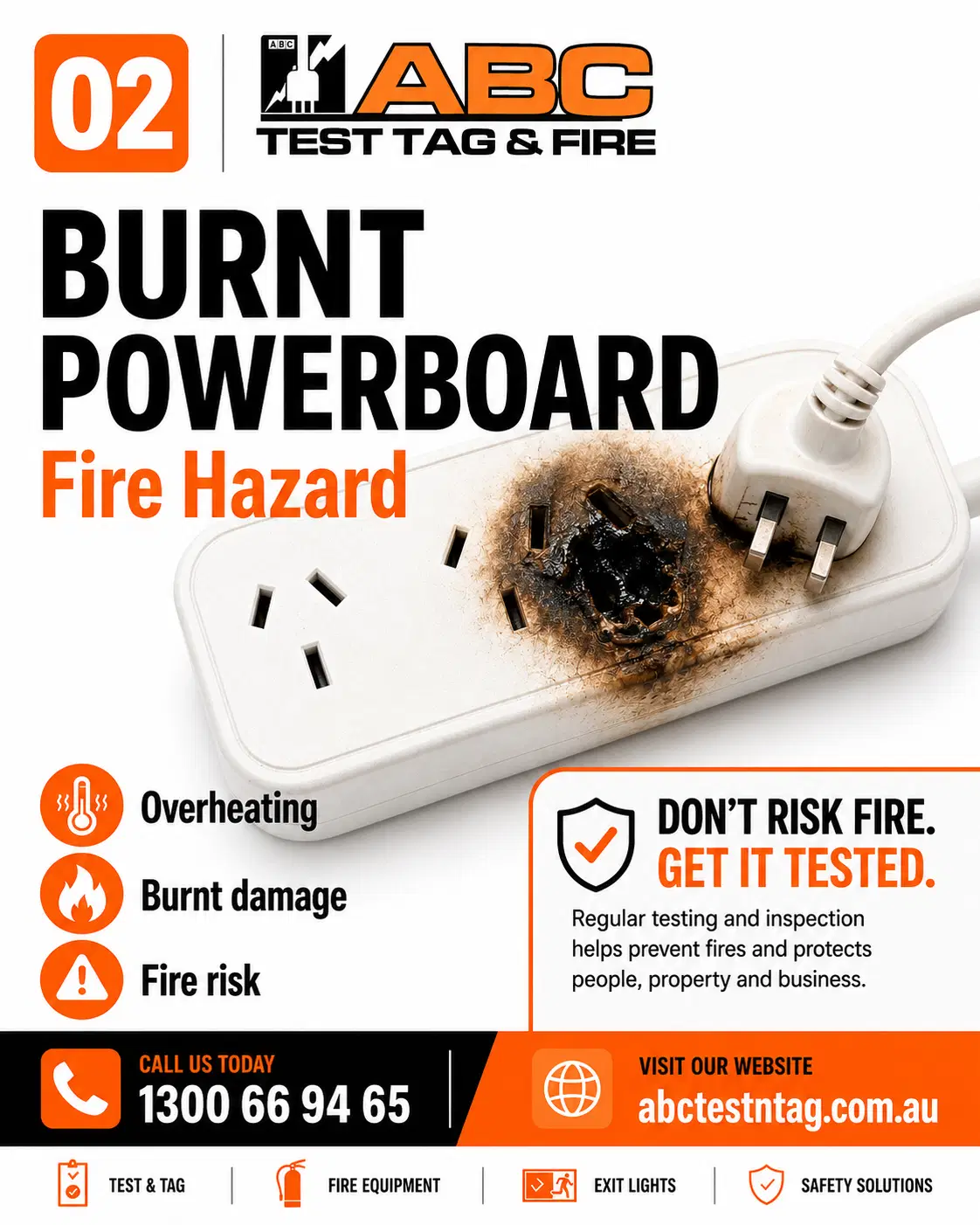
Moisture can reduce insulation performance, create conductive paths and accelerate corrosion in plugs, sockets, power boards, extension leads and portable equipment. Floodwater may also contain contaminants that make equipment unsafe even after it appears dry.
The risk increases where a workplace uses:
- Portable power tools and appliances
- Extension leads and power boards
- Temporary power supplies and portable RCDs
- Pumps, pressure washers and dewatering equipment
- Outdoor lighting, generators and construction equipment
- Equipment stored in low-lying or flood-prone areas
- Damaged or poorly protected leads
- Electrical equipment placed on wet floors or exposed surfaces
A current test tag does not guarantee that equipment remains safe after impact, water exposure, crushing, overheating or unauthorised modification. The equipment must be assessed in its current condition.
WorkSafe Queensland’s guidance requires employers to ensure workplace electrical equipment is safe, with inspection and testing programs determined by the type of work, equipment and workplace conditions. Refer to WorkSafe Queensland’s testing and tagging guidance and applicable Queensland electrical and WHS legislation.
What Does AS/NZS 3760:2022 Require?
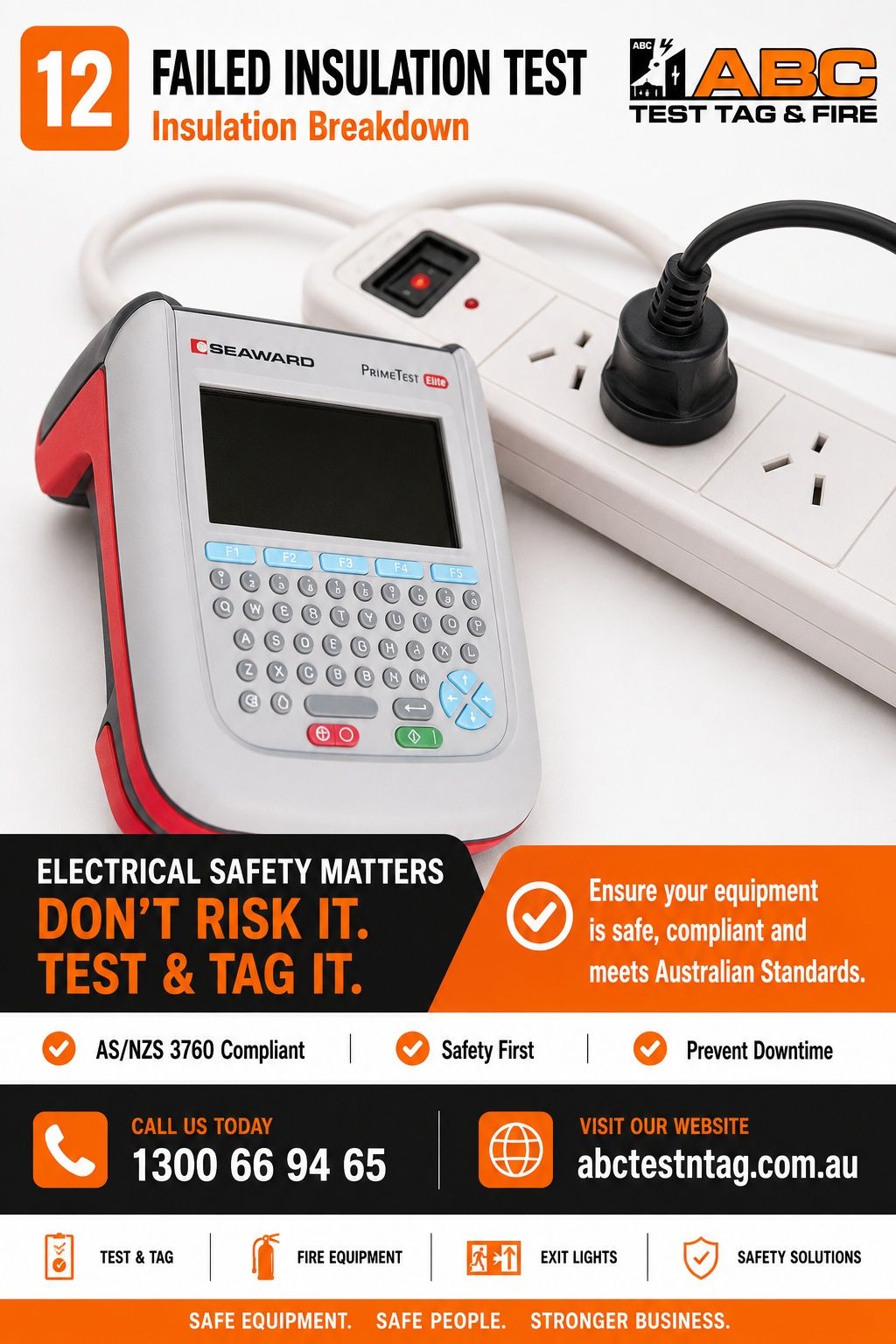
AS/NZS 3760:2022, In-service safety inspection and testing of electrical equipment and RCDs, provides a systematic process for inspecting and testing electrical equipment and residual current devices.
A compliant inspection program generally involves:
-
Visual inspection
The tester checks plugs, pins, cords, strain relief, casings, switches, power boards and signs of overheating, corrosion, cracking or contamination. -
Electrical testing
Appropriate electrical tests are performed using suitable, maintained test instruments. Depending on the equipment, testing may assess insulation resistance, protective earth continuity, polarity and leakage-related characteristics. -
RCD testing
RCDs and safety switches are checked through user push-button testing and, where required, instrument testing of operating time and trip current. -
Status identification
Equipment that passes is identified with a durable tag. Equipment that fails must be clearly controlled and prevented from accidental use. -
Record keeping
Results, defects, corrective actions and next scheduled test dates should be documented in a compliance register.
Does Wet Weather Create One Universal Testing Interval?
No. Wet weather does not create one universal test and tag or RCD testing interval.
The correct program should reflect:
- The workplace risk assessment
- The type of work performed
- The location and environmental conditions
- The frequency and severity of equipment use
- Whether equipment is portable, fixed, outdoor or temporary
- Queensland electrical safety and WHS duties
- Applicable requirements under AS/NZS 3760:2022 and related standards
Construction sites, workshops and outdoor work areas will generally require more frequent attention than a controlled, low-risk office environment. A severe storm, flood, equipment relocation or water exposure may justify an immediate inspection regardless of the previous testing date.
For detailed guidance, see ABC Test Tag & Fire’s electrical test and tag services in Brisbane and RCD testing Brisbane compliance guide.
How Should Brisbane Businesses Review Electrical Equipment Before the Wet Season?
A pre-wet-season review should be planned and documented. It should not rely solely on employees identifying obvious damage during day-to-day work.
Step 1: Identify Higher-Risk Equipment
Create or update an asset register covering:
- Portable tools and appliances
- Extension leads and portable power boards
- Pumps and temporary power equipment
- Portable RCDs and safety switches
- Outdoor and construction equipment
- Equipment located in basements, yards or flood-prone areas
- Chargers, battery equipment and electrical accessories
Step 2: Inspect the Work Environment
Review whether equipment is:
- Stored above likely flood levels
- Protected from rain and wind-driven moisture
- Positioned away from wet floors and drainage paths
- Connected through suitable RCD protection
- Subject to crushing, vehicle movement or trip hazards
- Exposed to chemicals, mud, dust or corrosive conditions
Step 3: Arrange Competent Testing
Test and tag must be performed by a person who is competent for the work and understands the applicable standard, equipment and testing process. RCD instrument testing must also be completed by a suitably competent person using appropriate test equipment.
Do not treat an informal visual check as a substitute for required electrical testing.
Step 4: Correct Defects Before Storms Arrive
A failed or damaged item should be:
- Disconnected where safe to do so
- Tagged clearly as DO NOT USE or OUT OF SERVICE
- Removed from the work area where practicable
- Repaired or replaced by an appropriately qualified person
- Retested before being returned to service

What Should Happen After a Storm or Flood?
After severe weather, do not immediately re-energise equipment simply because it was operating normally beforehand.
Water-Exposed Equipment: Dry, Repair or Replace?
The correct decision depends on the extent and type of exposure.
- Light surface moisture: Isolate the item, allow appropriate controlled drying and obtain an assessment before use.
- Water entering a plug, socket, motor, switch or enclosure: Keep the item isolated and arrange professional inspection.
- Floodwater or contaminated water exposure: Treat the item as unsafe until assessed. Contamination may remain inside insulation, motors and electrical components.
- Visible burning, cracking, corrosion or impact damage: Remove from service and arrange repair or replacement.
- Equipment repaired after exposure: Retest before returning it to the workplace.
Drying alone does not prove electrical safety. Equipment must be assessed and, where appropriate, repaired and retested by a competent person.
Pre-Wet-Season and Post-Storm Checklist
| Workplace | Pre-wet-season priorities | Post-storm controls |
|---|---|---|
| Office | Check power boards, chargers, kitchen appliances, UPS equipment and RCD records. | Isolate equipment affected by roof leaks, water ingress or power surges. |
| Warehouse | Inspect portable tools, leads, loading-area equipment and low-level sockets. | Check for flooding, damaged leads, wet outlets and equipment moved by water. |
| Workshop | Review power tools, three-phase equipment, compressors, pumps and extension leads. | Apply do-not-use controls to wet, crushed, corroded or overheated equipment. |
| Construction site | Confirm temporary power, portable RCDs, leads, tools and outdoor equipment are correctly controlled. | Stop work in unsafe conditions and inspect all equipment exposed to rain or flooding. |
| Logistics yard | Review outdoor power, chargers, pumps, lighting and vehicle-related electrical equipment. | Check equipment, isolators and connections for water, impact and debris damage. |
| Retail business | Inspect display equipment, refrigeration connections, power boards and emergency systems. | Isolate items affected by leaks, flooding, storm damage or electrical faults. |
Practical Checklist
Before the wet season:
- Update the electrical equipment and RCD register.
- Review test dates and risk-based testing intervals.
- Inspect extension leads, plugs, power boards and portable tools.
- Confirm temporary and outdoor power is protected from moisture.
- Test RCDs according to the applicable workplace program.
- Move vulnerable equipment above anticipated flood levels.
- Confirm staff know how to report defects and apply do-not-use controls.
- Schedule electrical, fire and emergency-lighting inspections.
After a storm or flood:
- Do not use submerged or visibly water-damaged equipment.
- Isolate and label suspect equipment.
- Check switchboards, sockets, leads, pumps and outdoor connections.
- Arrange competent inspection, repair and retesting.
- Record the incident, equipment status and corrective action.
- Update the digital compliance register.
What About Fire Equipment and Emergency Lighting?
A complete seasonal safety review should cover electrical, fire and emergency escape systems together.
Fire Extinguishers and Fire Blankets
Under AS 1851:2012, fire equipment requires scheduled inspection and maintenance. ABC Test Tag & Fire provides six-monthly routine testing of fire extinguishers and fire blankets, together with checks of condition, accessibility, signage and service tags.
Where installed, fire hose reels and related fire equipment should also be included in the site compliance review. Fire extinguishers, blankets and other safety equipment are available for sale where replacement or additional coverage is required.
See our fire extinguisher testing Brisbane service for further information.
Exit and Emergency Lights
Emergency escape lighting and exit signs must remain functional during power failure and evacuation conditions. ABC Test Tag & Fire conducts annual testing and sales of exit lights in accordance with AS/NZS 2293, including function and duration considerations where applicable.
Review emergency lighting after storms, power interruptions, roof leaks or building works. Visit the ABC Test Tag & Fire home page for exit-light testing and sales information.
Why Use ABC Test Tag & Fire?
ABC Test Tag & Fire is a locally owned and fully insured compliance provider serving Brisbane, Ipswich, the Gold Coast and surrounding suburbs.
Our integrated services include:
- Electrical test and tag for 240V, three-phase and low-voltage equipment
- RCD and safety-switch testing
- QR-coded tags for efficient asset identification
- Digital compliance certificates and fast reporting
- Six-monthly fire extinguisher and fire blanket servicing
- Fire equipment sales
- Annual exit-light and emergency-lighting testing
- Exit-light and safety-equipment sales
Bundling services can reduce overall compliance costs by 20–40%. The more services you book, the more you save. Eligible customers may also earn QANTAS Business Rewards points, subject to applicable terms and conditions.

Frequently Asked Questions
Is test and tag required before every wet season?
Not automatically. A wet-season review is a prudent risk-control measure, but testing intervals must be determined by workplace conditions, risk assessment, applicable Queensland duties and AS/NZS 3760:2022 requirements.
Can employees use equipment with a current tag after flooding?
No. Water exposure can create new hazards. Isolate the equipment, apply a do-not-use control and arrange professional inspection, repair and retesting before use.
Who can perform test and tag?
Testing should be performed by a competent person with suitable knowledge, training, equipment and understanding of the applicable standard. Electrical repair work must be completed by an appropriately licensed electrical professional.
What is included in RCD testing?
RCD testing may include visual inspection, push-button user testing and instrument testing of operating time and trip current, depending on the device, workplace and applicable program.
Can fire and emergency-lighting checks be completed with electrical testing?
Yes. Combining services creates a more efficient compliance program and can reduce costs by 20–40%, while providing consolidated digital records.
Book Your Wet-Season Compliance Review
Do not wait until storm damage, flooding or a failed safety switch exposes a control gap. Arrange a documented review of your electrical equipment, RCDs, fire equipment and emergency lighting before Queensland’s wet season intensifies.
Contact ABC Test Tag & Fire on 1300 66 94 65 for test and tag Brisbane, RCD testing Brisbane, electrical safety compliance Brisbane and workplace electrical safety Ipswich services.
