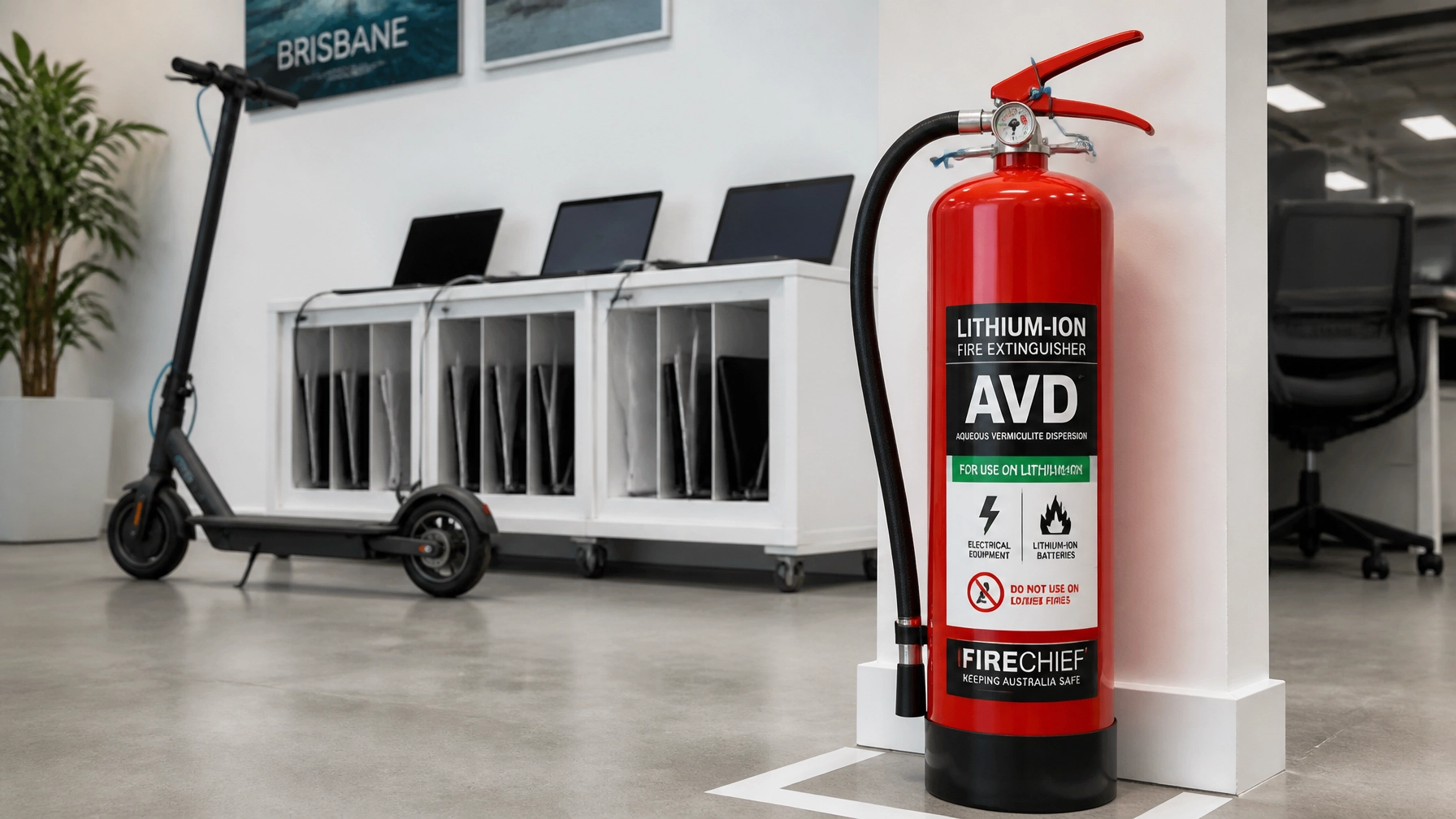
In the modern Brisbane workplace, the proliferation of lithium-ion (Li-ion) batteries is undeniable. From the laptops and smartphones in our CBD offices to the e-scooters used for commutes and the high-capacity power tools in our industrial warehouses, these energy-dense power cells are essential to daily operations. However, this convenience comes with a significant and escalating regulatory and safety challenge.
According to data from the Queensland Fire and Emergency Services (QFES), Queensland recorded more than 200 lithium-ion battery fires in just the first 11 months of 2025. This surge in incidents has moved the topic from a niche technical concern to a primary focus for workplace health and safety (WHS) officers and business owners across the Brisbane and Ipswich regions. As these batteries become more integrated into our workflows, the risk of "thermal runaway" becomes a critical variable in any comprehensive risk assessment.
What is Thermal Runaway?
To manage the risk effectively, one must first understand the underlying chemical process. A lithium-ion battery fire is fundamentally different from a traditional electrical or combustible solids fire. It is driven by a phenomenon known as thermal runaway.
Thermal runaway occurs when an internal failure: caused by physical damage, manufacturing defects, overcharging, or exposure to external heat: triggers an uncontrollable, self-sustaining exothermic reaction. Once the internal temperature of a cell reaches a critical threshold, it releases energy that further increases the temperature, leading to a rapid chain reaction across adjacent cells.
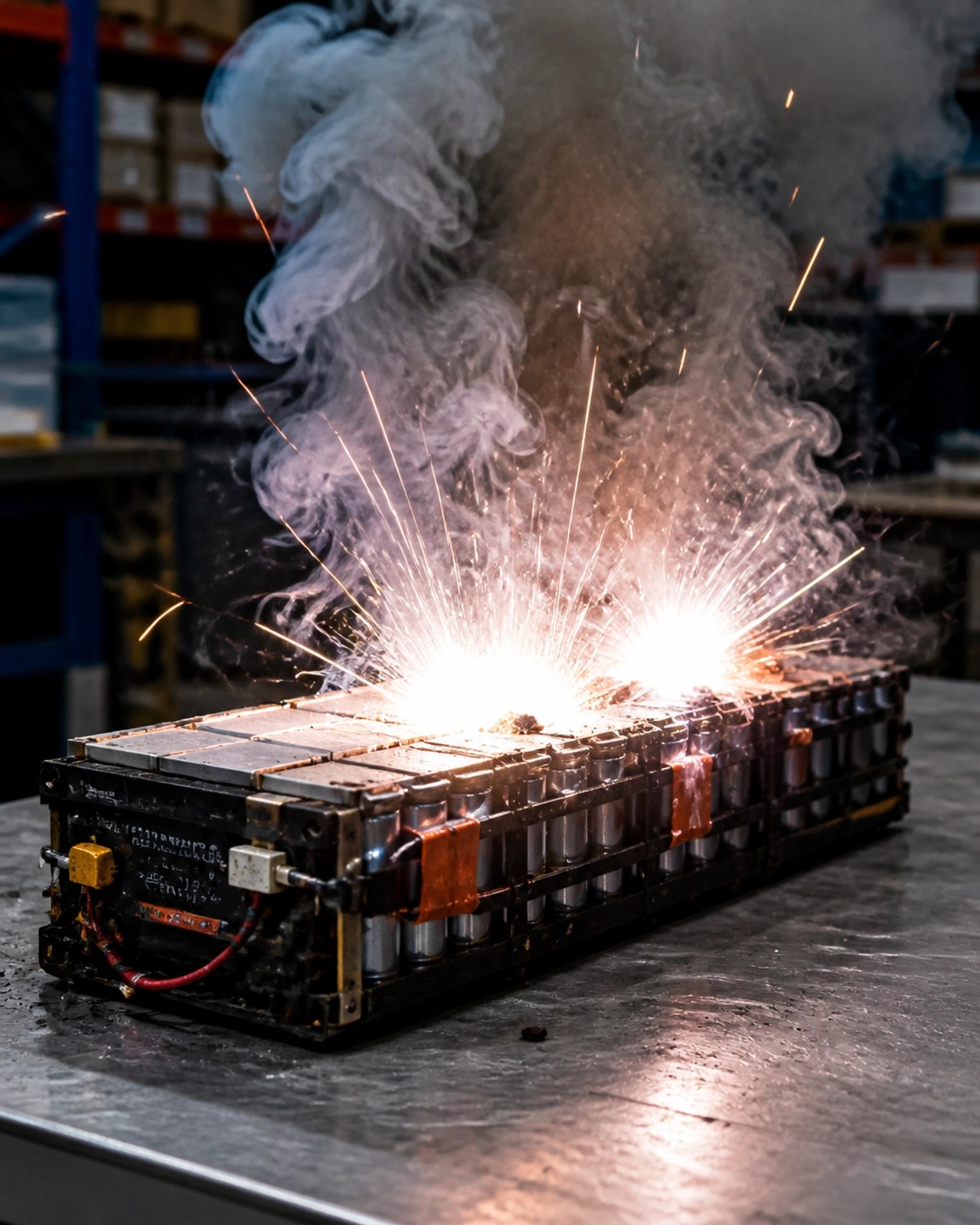
How does this impact your workplace? Unlike standard fires, a lithium-ion fire:
- Is Self-Oxidising: The chemical reaction produces its own oxygen, meaning traditional "smothering" techniques (like CO2 extinguishers) are often ineffective.
- Releases Toxic Gases: Significant quantities of hydrogen fluoride and other hazardous vapours are emitted, necessitating immediate evacuation.
- Is Prone to Reignition: Even after visible flames are suppressed, the internal heat can cause the battery to reignite hours or even days later.
Why Standard Extinguishers Fail to Meet the Requirement
A common misconception among business owners in Brisbane is that a standard Dry Powder (ABE) or Carbon Dioxide (CO2) fire extinguisher is sufficient for all workplace hazards. While these are essential for general compliance under AS1851:2012, they are largely ineffective against a lithium-ion battery in full thermal runaway.
Dry powder may suppress the external flames, but it cannot penetrate the battery casing to cool the internal cells and stop the chemical reaction. This is why everyone is talking about specialized suppression technology. To properly mitigate the risk, workplaces should consider:
- Specialized Li-ion Extinguishers (AVD): These utilize Aqueous Vermiculite Dispersion (AVD), a revolutionary agent that encapsulates the fuel source and provides a cooling thermal barrier to stop the spread of runaway.
- Fire Blankets: Specialized heavy-duty fire blankets can be used to contain the heat and toxic fumes of a smaller device (like a laptop or e-scooter) while waiting for emergency services to arrive.
The Role of Electrical Test & Tag in Fire Prevention
While fire suppression is the "last line of defense," prevention remains the most effective strategy. Many lithium-ion fires are traced back to faulty charging equipment or incompatible cables. This is where Electrical Test & Tag services become indispensable.
Under AS/NZS 3760, all electrical equipment in a workplace must be regularly inspected and tested for safety. This includes the chargers and power banks used for lithium-ion devices. A faulty charger can lead to overcharging or voltage spikes, both of which are primary triggers for battery failure.
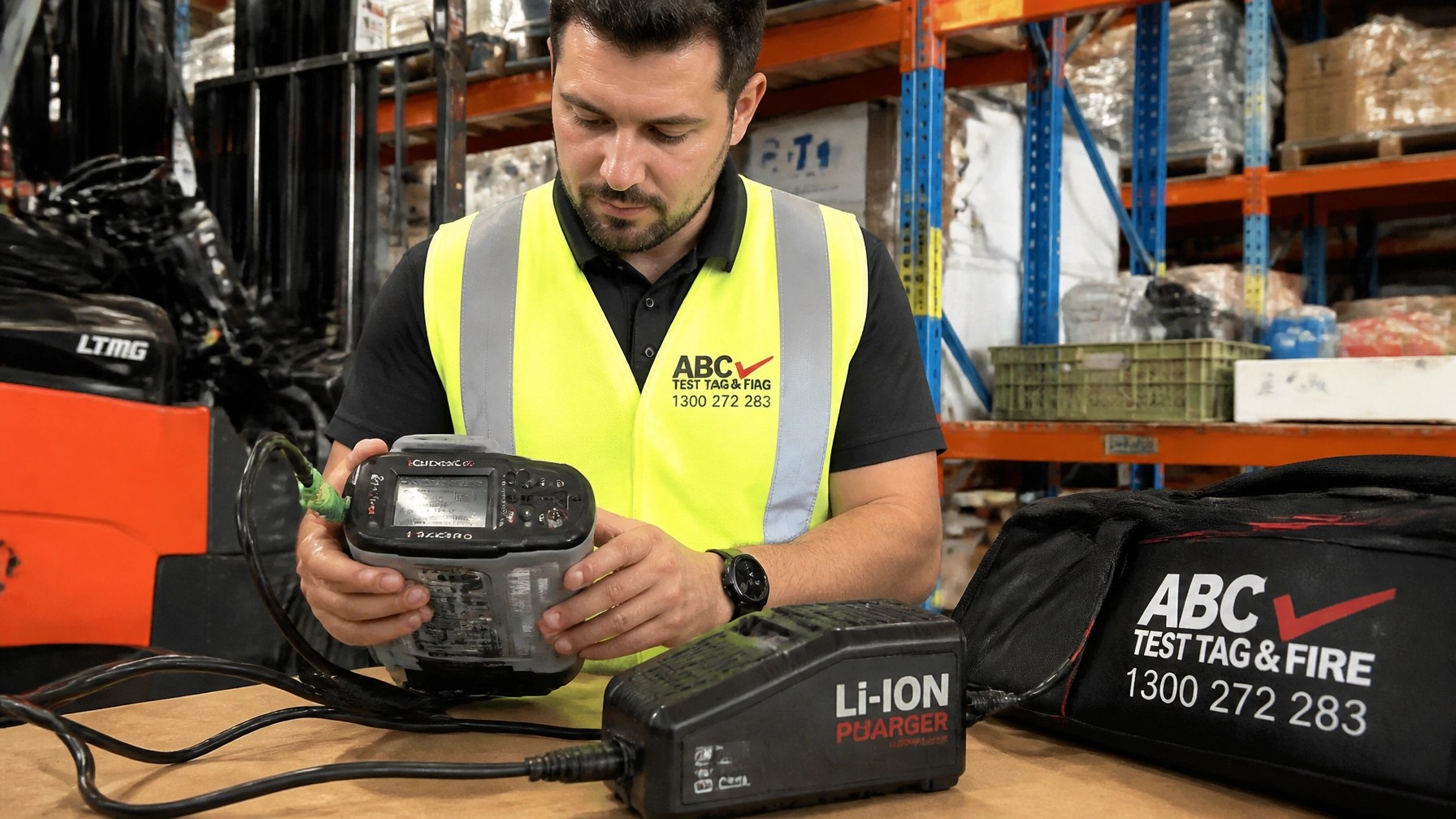
By ensuring that every charger in your facility: whether in a corporate office in South Bank or a warehouse in Acacia Ridge: is functioning within manufacturer specifications, you systematically reduce the likelihood of a catastrophic fire event.
Regulatory Requirements and Your Duty of Care
In Australia, the Work Health and Safety (WHS) Act mandates that employers provide a safe working environment. This duty of care extends to identifying "emerging risks." Failing to account for the specific hazards of lithium-ion storage and charging can leave a business liable in the event of an incident.
The systematic process for compliance involves two key pillars provided by ABC Test Tag & Fire:
1. Routine Fire Equipment Service (AS1851)
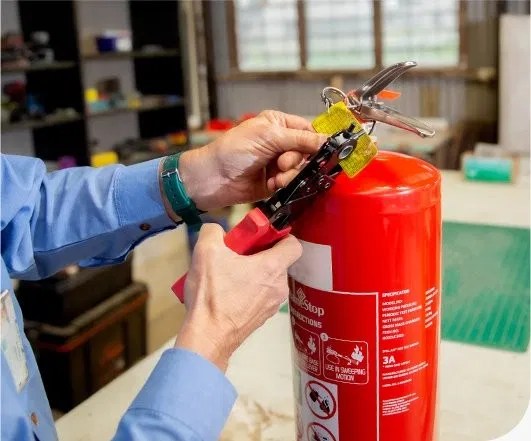
Your fire extinguishers and blankets must be serviced every six months. During these inspections, our technicians assess whether your current equipment is appropriate for the hazards present. If your warehouse has transitioned to using more electric forklifts or battery-powered tools, your fire safety profile has changed, and your equipment must reflect that. You can learn more about this in our guide on fire extinguisher testing.
2. Digital Compliance and Reporting
In the event of an audit or insurance claim, manual logbooks are often insufficient. ABC Test Tag & Fire provides digital compliance certificates and QR-coded tags, ensuring that your records for both fire and electrical safety are accessible and accurate.
Practical Mitigation: A Checklist for Brisbane Workplaces
How should your business respond to the lithium-ion risk? Implement the following systematic controls:
- Audit Your Charging Stations: Are e-scooters and power tools being charged on flammable surfaces like carpet or wooden benches? Transition all charging to non-combustible surfaces (metal or tile).
- Prohibit Unattended Charging: Ensure that high-capacity batteries are not left charging overnight when the premises are unoccupied.
- Install Specialized Suppression: Place AVD extinguishers in dedicated charging zones.
- Verify Charger Integrity: Use professional test and tag services to identify damaged cables or internal faults in power adapters.
- Employee Education: Train staff to recognize the warning signs of battery failure: unusual heat, swelling, "hissing" sounds, or a distinct chemical odour.
Why Bundling Services is the Strategic Choice
Managing workplace safety often involves coordinating multiple contractors, which leads to increased costs and administrative friction. ABC Test Tag & Fire addresses this by offering a bundled approach. By combining Electrical Test & Tag and RCD Testing with Fire Service & Sales, Brisbane businesses can achieve significant advantages.
20-40% Cost Reduction
Bundling services allows us to streamline our site visits, passing the efficiency savings directly to you. Most clients see a reduction of 20-40% compared to hiring separate electrical and fire contractors.
Qantas Points for Compliance
As a business owner, compliance is a mandatory expense. We have partnered with Qantas Business Rewards to allow our clients to earn Qantas points on every dollar spent on safety services. This turns a regulatory necessity into a corporate benefit.
Local Expertise
We are a locally owned and fully insured provider servicing all areas from the Brisbane CBD to Ipswich and Bundamba. We understand the specific QLD laws and Australian Standards that apply to your industry.
Conclusion: Act Before the Incident
The conversation around lithium-ion battery fires is not a trend; it is a response to a documented increase in workplace risk. For businesses in Brisbane and Ipswich, the question is no longer if you will encounter these batteries, but how you will manage the associated dangers.
Mitigation requires a dual approach: preventing failure through rigorous electrical testing and ensuring rapid suppression through specialized fire equipment. By partnering with ABC Test Tag & Fire, you ensure that your workplace meets its legal obligations while benefiting from the cost-efficiency of bundled services.
Are your chargers tested? Is your fire gear ready for a lithium-ion event? Contact ABC Test Tag & Fire today to secure your workplace and start earning rewards for your compliance.