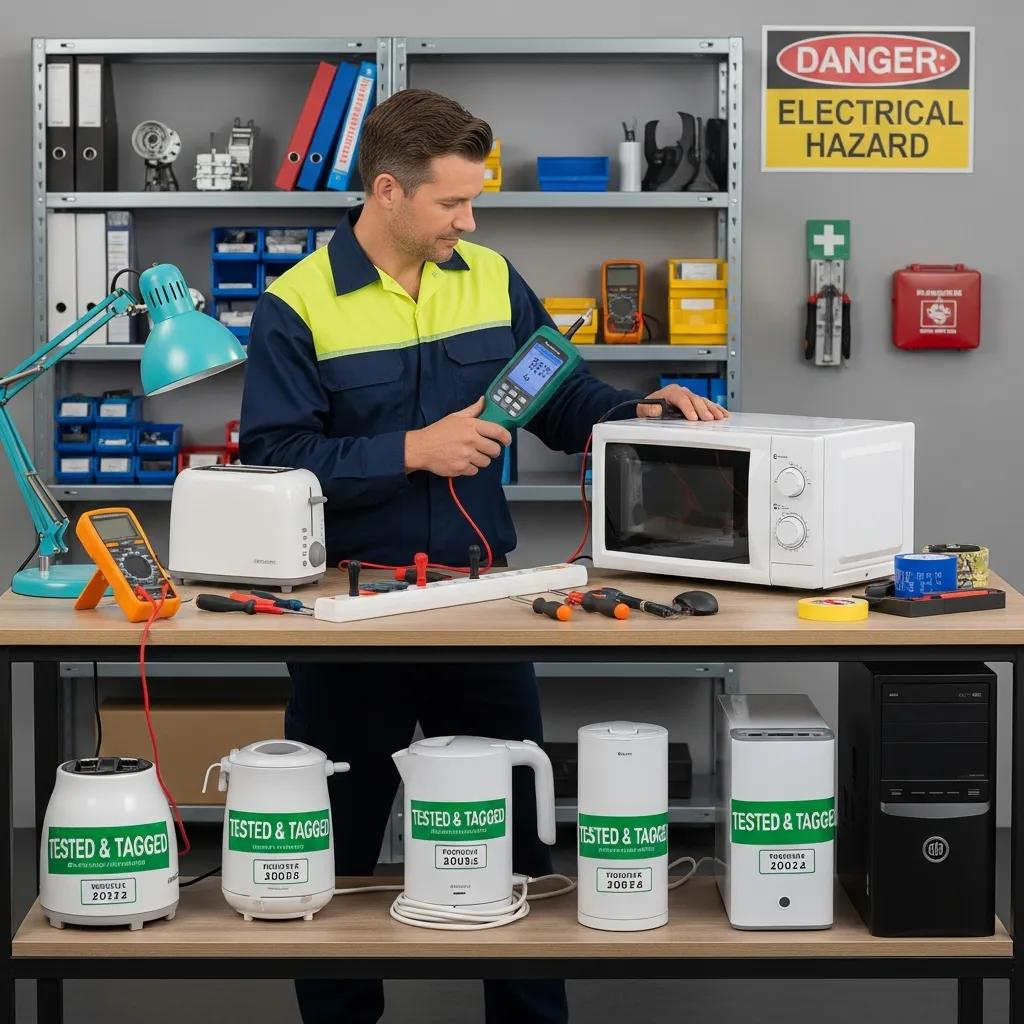
Electrical equipment is used throughout every Brisbane and Ipswich workplace, from office computers and kitchen appliances to three-phase machinery, power tools, extension leads and portable lighting. Where equipment is damaged, poorly maintained or exposed to harsh conditions, it can create electric shock, fire and operational risks.
AS/NZS 3760:2022 provides the recognised framework for the in-service safety inspection and testing of electrical equipment and Residual Current Devices (RCDs). However, the standard must be applied alongside Queensland legislation, workplace risk assessments and other relevant standards, including AS/NZS 3000 and AS/NZS 3012.
This guide explains what business owners, safety officers and facility managers need to know about AS/NZS 3760 compliance, test and tag obligations, RCD testing frequencies and practical compliance management in Brisbane workplaces.
What Is AS/NZS 3760:2022?
AS/NZS 3760:2022 is the Australian and New Zealand Standard titled In-service safety inspection and testing of electrical equipment and RCDs. It establishes a systematic process for identifying electrical hazards after equipment has entered service.
The standard addresses:
- Visual inspection of electrical equipment
- Electrical safety testing
- RCD inspection and performance testing
- Testing intervals based on risk and environment
- Equipment identification and tagging
- Recordkeeping and documentation
- Competency requirements for people conducting inspections and tests
It applies to many portable and connectable electrical items, including Class I and Class II appliances, cord sets, extension leads, power boards and portable equipment.
“Regular inspection and testing help identify potential risks before they become dangerous.”
: Standards Australia, Spotlight on AS/NZS 3760:2022
AS/NZS 3760:2022 is not, by itself, Queensland legislation. It is a technical standard that supports a business’s duty to manage electrical risks safely and demonstrate a defensible compliance process.
What Changed or Became More Important in the 2022 Edition?
How Does the Risk-Based Approach Affect Testing?
The 2022 edition places greater emphasis on selecting inspection and testing intervals according to the environment in which equipment is used.
A computer in a controlled office environment does not experience the same level of mechanical damage, moisture, contamination or cord movement as a power tool on a construction site. Applying one identical interval to every item may therefore be inefficient or inadequate.
A responsible person should consider:
- The likelihood of equipment damage
- Exposure to water, dust, heat, chemicals or corrosive substances
- Frequency of use and movement
- Whether cords are regularly flexed or disconnected
- The competency of equipment users
- The consequences of equipment failure
- Previous failure and defect history
- Whether the equipment is used outdoors or in a hostile environment
Testing intervals should be documented. If an organisation changes its interval schedule, the risk assessment and rationale should be retained with its compliance records.
Why Are Three-, Six- and Twelve-Month Intervals Common?
AS/NZS 3760:2022 provides environment-based guidance, generally ranging from frequent testing in high-risk environments to longer intervals in controlled, low-risk areas.
The following table provides practical guidance for common Brisbane and Ipswich workplaces:
| Workplace environment | Typical equipment | Typical maximum interval under AS/NZS 3760:2022 guidance* |
|---|---|---|
| Construction and demolition sites | Power tools, extension leads, portable lighting and generators | 3 months |
| Outdoor worksites and hostile environments | Portable equipment exposed to weather, dust, moisture or impact | 3 months |
| Factories and workshops | Hand tools, production equipment, leads and workshop appliances | 6 months |
| Warehouses and industrial areas | Portable tools, chargers, cleaning equipment and cord sets | 6–12 months, depending on risk |
| Retail and hospitality | Point-of-sale equipment, kitchen appliances, display equipment and leads | 12 months |
| General offices | Computers, monitors, printers, chargers and kitchen appliances | 12 months |
| Controlled, low-risk areas | Static equipment with limited cord movement and no hostile exposure | Up to 5 years in suitable circumstances |
| Mine and mine-construction sites | Portable tools, leads, lighting and site equipment | Generally 3 months |
*These are general guidance intervals, not a substitute for the current standard, Queensland statutory requirements or a documented site-specific risk assessment. Intervals may need to be shorter.
Do not use a five-year interval simply because equipment is located in an office. The condition, use and environment must support the decision.
What Equipment Requires Inspection and Testing?
Does the Requirement Apply Only to Small Appliances?
No. Electrical test and tag services may cover equipment connected to a nominal supply voltage, including:
- 240V portable appliances
- Three-phase equipment and cord sets
- Class I earthed appliances
- Class II double-insulated appliances
- Portable power tools
- Extension leads and power boards
- Portable lights and heaters
- Kitchen and hospitality equipment
- Office equipment
- Workshop and factory equipment
- Hire equipment
- Low-voltage equipment where the applicable testing procedure requires assessment
The equipment register should identify each item by asset number, plant number, serial number, location or another reliable identifier. Unidentified items are difficult to track and can create gaps in the compliance record.

What Happens During the Test and Tag Process?
A compliant testing program is more than attaching a coloured sticker. It is a controlled sequence of inspection, testing, identification and reporting.
Step 1: Visual Inspection
The technician examines the appliance, plug, cord, enclosure and accessories for defects such as:
- Frayed, cut or crushed cables
- Cracked plugs or appliance housings
- Exposed conductors
- Missing earth pins
- Loose or damaged strain relief
- Signs of overheating or arcing
- Contamination, moisture or unauthorised modifications
- Damaged extension leads, power boards or connectors
Visual inspection is essential because some hazards cannot be identified by an electrical test alone.
Step 2: Electrical Testing
Using suitable and calibrated test equipment, the technician selects tests appropriate to the equipment type. These may include:
- Earth continuity: Confirms that exposed conductive parts have an effective protective earth path.
- Insulation resistance: Assesses whether insulation is resisting unwanted current leakage.
- Polarity: Confirms correct active, neutral and earth connections where applicable.
- Leakage or protective conductor current: Identifies potentially unsafe leakage current.
- Functional checks: Confirms that switches, controls and protective features operate as intended.
A failed test is not a minor administrative issue. The item should be removed from service, clearly identified as unsafe and repaired, replaced or disposed of under the business’s defect-control procedure.
Step 3: Tagging and Identification
Equipment that passes the required inspection and tests receives a durable tag showing relevant information, such as:
- Date tested
- Next test due date
- Tester or service provider identification
- Asset or plant number
- Pass or service status
QR-coded tags can connect the physical item to a digital record, allowing managers to retrieve test results without relying solely on paper files.
Step 4: Digital Records and Compliance Certificates
A robust compliance record should show:
- Equipment description and unique identifier
- Location or department
- Inspection and test date
- Results for each applicable test
- Pass, fail or service outcome
- Defects identified
- Corrective actions
- Next scheduled test date
- Technician or tester details
Digital records improve audit readiness, simplify follow-up actions and help facility managers identify overdue or repeatedly failing equipment.
How Does RCD Testing Work?
An RCD, commonly called a safety switch, monitors electrical current and disconnects supply when it detects an imbalance that may indicate current flowing through an unintended path.
RCD testing involves two different activities.
What Is the Operator Push-Button Test?
The push-button test checks whether the RCD’s test mechanism causes the device to trip. It is a basic functional check and does not measure the precise operating time or trip current.
The test may be performed by an instructed user or competent person, depending on the workplace procedure. It should only be carried out when interruption of supply has been considered and it is safe to do so.
What Is an Instrument Operating-Time Test?
An instrument test uses a suitable RCD tester to measure whether the device trips within the required operating parameters. This is a more detailed performance test and must be completed by a competent person using appropriate equipment.
Typical Queensland workplace intervals include:
| Type of work | Fixed RCD push-button test | Fixed RCD instrument test | Portable RCD push-button test | Portable RCD instrument test |
|---|---|---|---|---|
| Construction work | Monthly | 12 monthly | Daily or before each use | 3 monthly |
| Manufacturing work | 6 monthly | 12 monthly | Daily or before each use | 12 monthly |
| Office work | 6 monthly | 2 yearly | 3 monthly | 2 yearly |
| Other service work | 6 monthly | 2 yearly | 6 monthly | 2 yearly |
These intervals reflect Queensland requirements summarised by WorkSafe Queensland. More frequent testing may be necessary after a risk assessment.
AS/NZS 3000 is primarily concerned with electrical installations and protective measures, while AS/NZS 3760 addresses in-service inspection and testing. Both must be considered where RCDs and workplace electrical systems are involved.
Who Is Permitted to Test and Tag?
A test and tag technician must be a competent person. Competency means having the knowledge, practical skills, training and experience necessary to inspect and test the relevant equipment safely.
A competent person is not automatically the same as a licensed electrician.
A competent test and tag person may perform in-service inspection and testing within their training and authorisation. A licensed electrician is required for electrical work such as:
- Repairing or modifying electrical equipment
- Removing covers where energised parts may be exposed
- Altering fixed wiring
- Installing or replacing fixed RCDs
- Conducting work on switchboards or electrical installations
- Diagnosing or rectifying defects requiring electrical work
Never ask an untrained employee to repair failed equipment. Isolate it and obtain appropriate electrical assistance.
What Are the Queensland Legal Obligations?
Queensland businesses must manage electrical risks under the Electrical Safety Act 2002 and the Electrical Safety Regulation 2013. Businesses that are also PCBUs have duties under Queensland workplace health and safety legislation to provide and maintain a safe working environment.
Non-compliance can result in:
- Improvement or prohibition notices
- Regulatory investigation and prosecution
- Significant fines for businesses and individuals
- Workplace disruption or equipment isolation
- Failed client, contractor or insurance audits
- Increased difficulty demonstrating due diligence after an incident
- Potential complications with insurance claims where safety obligations were not met
Insurance does not automatically become invalid because a tag is overdue. However, inadequate inspection records, ignored defects or an absence of risk controls may create serious evidentiary and coverage issues.
How Can Brisbane Businesses Simplify Compliance?
ABC Test Tag & Fire provides coordinated test and tag services, RCD testing and broader workplace safety compliance support across Brisbane, Ipswich and surrounding suburbs.
Our service includes:
- Testing of 240V, three-phase and relevant low-voltage equipment
- Visual inspection and electrical safety testing
- Durable QR-coded compliance tags
- Digital compliance certificates and records
- RCD push-button and instrument testing
- Practical scheduling for offices, factories, warehouses, shops and worksites
- Bundled electrical, fire and exit-light services that can save clients 20–40%
- A locally owned and fully insured service
- Eligibility to earn Qantas Business Rewards points on applicable services, subject to program terms
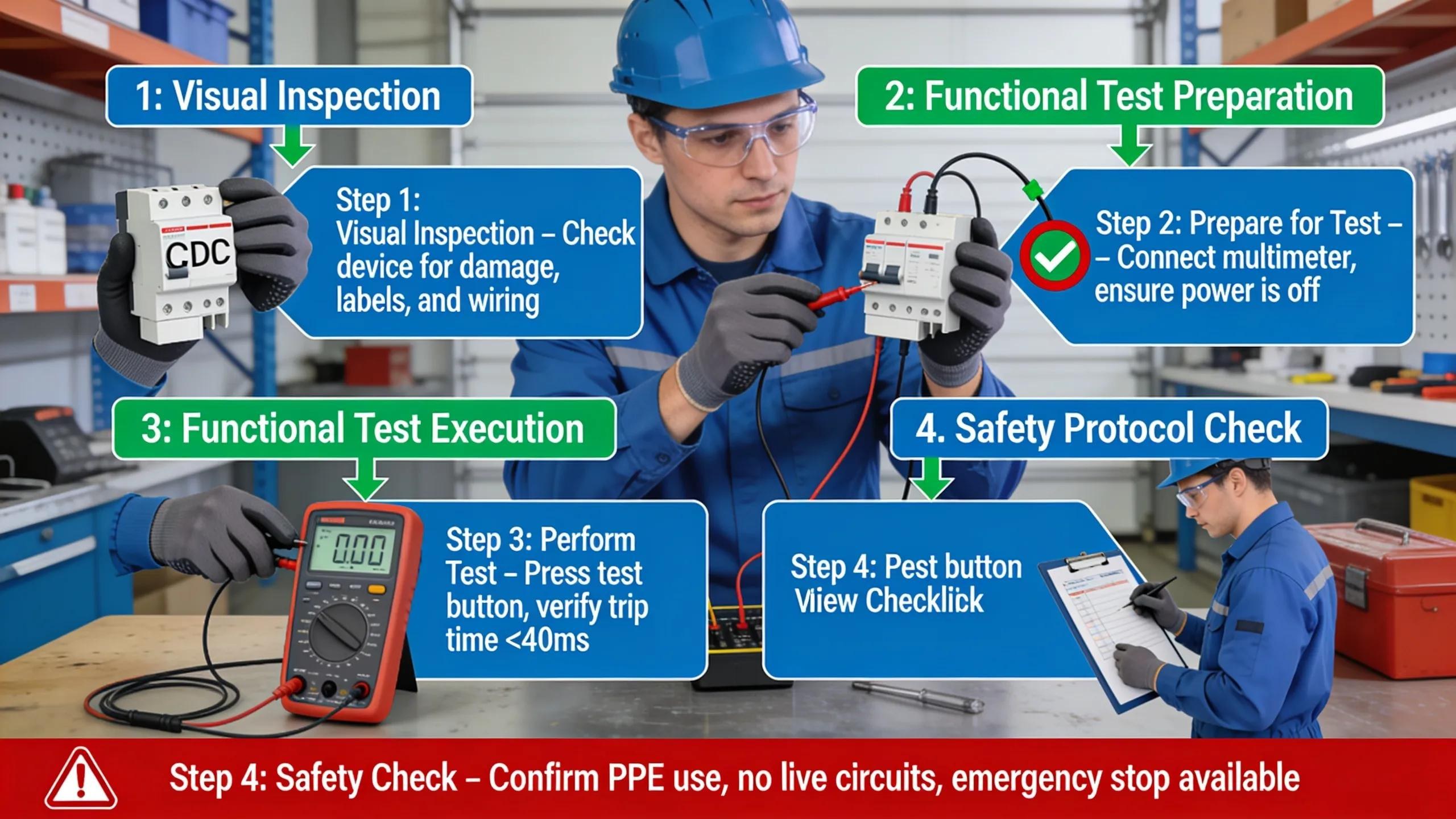
Combining test and tag with RCD testing in Brisbane and other scheduled safety services reduces administration and helps prevent separate compliance tasks from being overlooked.
What Should You Do Now?
- Identify all portable, connectable and RCD-protected equipment.
- Confirm the workplace classification and environmental risk.
- Compare your current schedule with Queensland statutory intervals.
- Remove failed or damaged equipment from service immediately.
- Maintain a central equipment register and digital evidence.
- Schedule testing before due dates, not after they expire.
- Review the regime after incidents, equipment changes or changes in workplace conditions.
For professional electrical test and tag services in Brisbane, contact ABC Test Tag & Fire on 1300 66 94 65. We service businesses throughout Brisbane, Ipswich and surrounding areas with efficient, documented and risk-focused compliance support.
Leave a Reply